
A motorcycle crash can change your life in a moment. Suddenly there are hospital visits, mounting medical bills, missed work, and questions abodmut what comes next.
It is normal to worry about how long recovery will take, whether you can return to work, and who will pay the medical bills that are already arriving.
A Minneapolis motorcycle accident lawyer at Nicolet Law can find every insurance policy that might pay, deal with the insurance companies, and pursue a claim that covers what your crash cost you.
Insurance companies move fast and are often biased against motorcycle riders. They’ll be looking to settle your claim as quickly as possible, but we’re ready to fight back.
Nicolet Law represents clients across Wisconsin, Minnesota, North Dakota, Iowa, Indiana, Illinois, and Michigan.
Call 1-855-NICOLET or contact us online for a free consultation. You do not need to remember every detail of what happened. We can track it down. You do not pay attorney's fees unless we recover money for you.
Injured? Get Nicolet.
Minneapolis Motorcycle Accident Statistics
Federal and state crash data shows how far riders are overrepresented in traffic deaths, and how often the other driver is the one who caused it.
- Minnesota recorded 76 motorcyclist deaths in 2024, per the 2024 motorcycle crash data from NHTSA. Riders make up a small fraction of registered vehicles and a far larger share of the people killed on Minnesota roads.
- Motorcyclists died at 28.00 per 100 million miles traveled in 2024, about 27 times the rate for passenger car occupants at 1.05, per NHTSA's motorcycle crash data. The same collision that dents a car can end a rider's life.
- Of the 3,396 two-vehicle fatal crashes involving a motorcycle nationally in 2024, 45 percent involved the other vehicle turning left while the motorcycle was going straight, passing, or overtaking, per the same NHTSA motorcycle crash data. Nearly half of these deaths come from a driver crossing a lane a rider already occupied.
- 6,228 motorcyclists were killed nationally in 2024, and 34 percent of them were not wearing a helmet, per the same NHTSA motorcycle crash data. Minnesota requires a helmet only for riders under 18, as well as any unlicensed riders, so most adult riders are making a legal choice that an insurer will still raise later.
In Minneapolis, that left-turn pattern concentrates where turning traffic meets density: Hennepin and Lyndale through the neighborhoods, Washington Avenue and the University area, the Lake Street corridor, and the ramps feeding I-94 and I-35W. Behind many of these numbers is a rider facing surgeries, lost income, and an insurance company that is already making assumptions. A Minneapolis motorcycle accident lawyer can find the applicable coverage and counter that theory with evidence.
Does your auto insurance PIP cover you on a motorcycle in Minnesota?

Your car's PIP does not cover a motorcycle crash. Minnesota's No-Fault Act excludes motorcycles from the definition of a motor vehicle, so your car's personal injury protection does not extend to a motorcycle crash.
The statute itself includes this exclusion. Minn. Stat. § 65B.43 defines a motor vehicle as a vehicle "other than a motorcycle or other vehicle with fewer than four wheels."
Minnesota then goes a step further and requires insurers to spell it out. Under Minn. Stat. § 65B.48, a motorcycle insurance application must carry a bold-type warning stating that a Minnesota motorcycle policy provides liability coverage only, that no PIP is required, and that PIP from an auto policy will not extend to a motorcycle accident.
Some riders sign that notice and forget it. Then a crash happens, and they realize they don’t have automatic coverage.
The same rule does have an upside. Because motorcyclists sit outside the no-fault system, they are not held to the injury threshold that limits many car accident claims in Minnesota. A rider can pursue a full claim for pain and suffering without first clearing a statutory bar.
What coverage actually pays a Minneapolis rider's medical bills?
The answer depends on the coverage you purchased, the coverage available to the at-fault driver, and whether other policies may apply.
One thing surprises many riders: the at-fault driver's insurer usually will not pay medical bills as treatment occurs. Liability claims are typically resolved in a single settlement at the end of the case.
So the sources that actually cover treatment in the meantime are these:
- Optional motorcycle medical payments (MedPay), if you purchased it. It is available in Minnesota, but it doesn’t offer as much coverage as PIP.
- Your health insurance, which usually becomes the primary payer during treatment and then asserts a right to be reimbursed out of any compensation you recover.
- Uninsured and underinsured motorist coverage, which Minnesota requires on auto policies, but not on motorcycle policies, making it important to review all available policies after a crash. Minnesota's minimum liability limits of $30,000 per person run out fast.
Finding every policy that might apply is one of the first things we do, and it is not something an adjuster will do for you. Send us your declarations page, and we will read it at no cost. Call 1-855-NICOLET.
Is lane splitting legal in Minnesota?
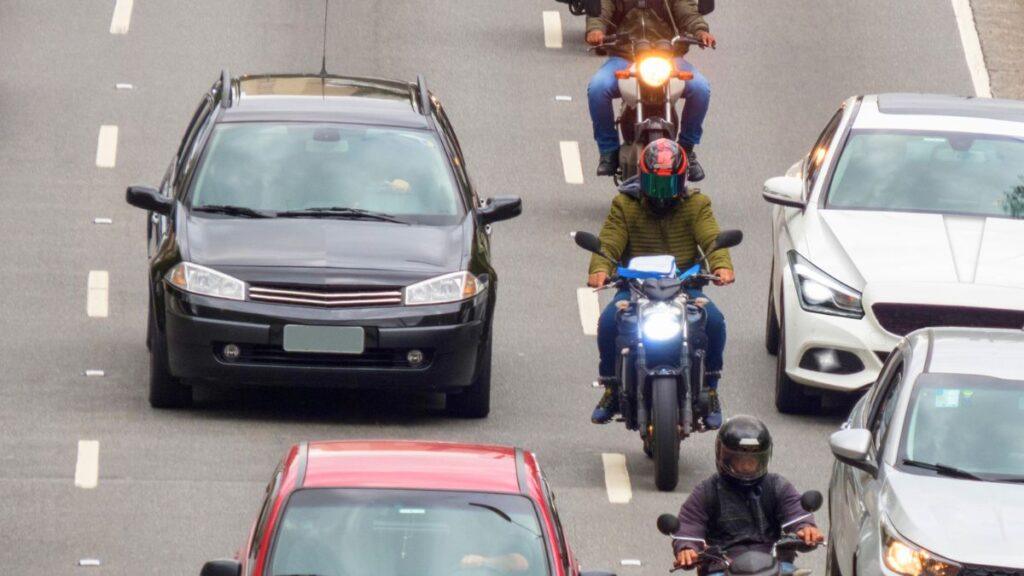
Yes, with certain rules in place.
As of July 1, 2025, Minnesota permits a motorcycle to pass another vehicle in the same lane and same direction of travel, provided the rider:
- Travels no faster than 25 miles per hour
- Goes no more than 15 miles per hour over the speed of surrounding traffic
The Minnesota Department of Public Safety notes that the practice remains prohibited in roundabouts, school zones, freeway on-ramps, and work zones narrowed to a single lane.
Why this matters in a claim: insurers may still argue that a rider who was filtering through traffic was doing something reckless, but if the crash happened after that date, within those limits, the rider was not breaking the law.
What does Minnesota require riders to wear?
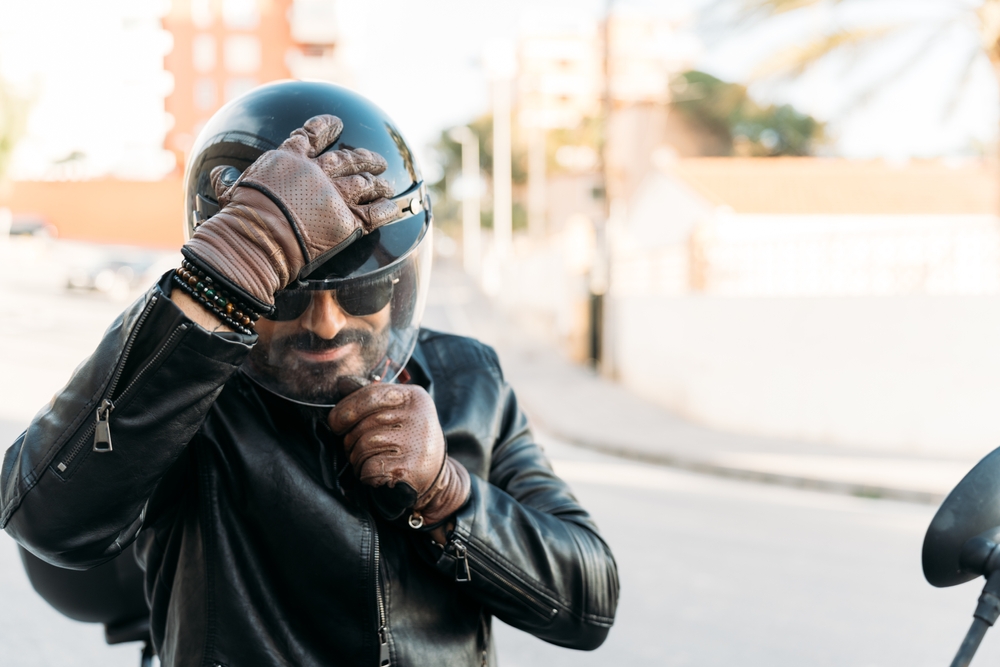
Riders must wear a helmet only if they are under 18 or have a provisional license.
Eye protection is required at every age.
A fully licensed adult rider does not break the law when they go without a helmet. Insurers may bring up the lack of a helmet anyway, but in an argument about whether a helmet could have lowered the severity of the resulting injuries. The response is medical, not legal: it depends on which injuries were sustained and whether a helmet could plausibly have changed them.
How does fault work, and how long do you have to file a claim?

Your recovery drops by your share of the blame and ends if your negligence was greater than the other party's. You have six years to file, which is longer than many states allow.
Minn. Stat. § 604.01 allows recovery when your fault is not greater than the other party's, with damages reduced proportionally.
Here is what that looks like with numbers. On a $100,000 claim, being 20% at fault means you recover $80,000. Being 40% at fault means you recover $60,000. At 51% at fault, you recover nothing at all. That 51% step ends the claim.
The filing deadline is six years under Minn. Stat. § 541.05. That may look generous on paper, but it is misleading in practice, because the evidence that answers a fault argument does not stick around for six years. It has a much shorter shelf life. Intersection camera footage, the bike itself, and the memories of witnesses at a Hennepin County intersection all degrade long before a legal deadline appears.
What can a Minneapolis motorcycle claim recover?
Much of what a crash cost you, including the part that does not come with an invoice. Minnesota places no general cap on damages in an ordinary injury case.
| Category | What it typically covers |
|---|---|
| Medical treatment | Emergency care, orthopedic surgery, road rash and skin grafts, rehabilitation, and the follow-up procedures that come later |
| Future care | Hardware removal, revision surgery, and long-term therapy |
| Lost income | Time away from work and a reduced ability to earn, which hits hardest in physical trades |
| Property damage | The bike, gear, helmet, and anything else destroyed in the crash |
| Pain and permanent limitation | Chronic pain, scarring, and the loss of the ability to perform daily functions |
Rider injuries are often severe if not permanent, and the gap between what a case looks like at week two and what it becomes at month six is exactly where early offers get made. Once the claim closes, it closes for good, so the future treatment picture must be clear before anyone signs off on an insurance offer.
Where do Minneapolis motorcycle crashes happen?
Typically at intersections, where another driver turns across a rider's path.
That is not a local observation, it is the national pattern, and the figures above put it at nearly half of all fatal two-vehicle motorcycle crashes.
Minneapolis stacks the conditions that produce those crashes. Hennepin and Lyndale carry dense turning traffic through neighborhoods with short sightlines. Washington Avenue and the University area mix riders with buses, delivery vehicles, and a constant stream of pedestrians. The Lake Street corridor and the routes feeding I-94 and I-35W put motorcycles alongside merging traffic at high speeds.
"I never saw the motorcycle" is one of the most common things a turning driver says. When they say that, they are often describing their own failure to watch for traffic.
Injured? Get Nicolet.
FAQs About Minneapolis Motorcycle Accident Claims
The driver who hit me had minimum coverage. Is that all I can get?
There can be more available. Minnesota's minimum is $30,000 per person, which a single surgery can exhaust, but underinsured motorist coverage on your own policy can help. Minnesota requires insurers to offer UM and UIM, but the coverage is technically optional. Send us your insurance details and we can look to see what your options are.
I was filtering between lanes when I was hit. Does that end my claim?
It depends on when it happened and how fast you were moving. Since July 2025, Minnesota has permitted lane filtering within specific speed limits, so conduct that would have been a violation before that date may be lawful now. Even where a rider was over the limit, that is a comparative fault argument rather than a bar.
How is a motorcycle claim different from a car accident claim in Minnesota?
The biggest difference is that no-fault does not apply. In a car crash, your own PIP starts paying medical bills immediately regardless of fault. On a motorcycle, there is no such automatic coverage, so the claim against the at-fault driver carries more weight and the sequence of who pays what changes completely.
Don’t Let The Insurance Company Decide Your Story.

Even the most cautious motorcycle riders get accused of being reckless by insurers and drivers. That accusation will likely shape the insurance company's first offer.
A Minneapolis motorcycle accident lawyer at Nicolet Law can identify applicable insurance coverage, counter the insurer’s assumptions with evidence, and pursue a claim that reflects the full impact of your injuries.
Nicolet Law Accident & Injury Lawyers has an office at 43 SE Main Street, Suite 500 in Minneapolis, and represents injured people across Wisconsin, Minnesota, North Dakota, Iowa, Indiana, Illinois, and Michigan. Call 1-855-NICOLET or reach us online. We offer free consultations, and no attorney's fees unless we recover money for you.
Legal Resources About Minnesota Motorcycle Claims
Below are attorney-curated resources that answer common questions people have about motorcycle accident claims. These are helpful resources, but they are not a substitute for personalized legal advice about your situation.
- Minnesota Legalizes Motorcycle Lane Sharing (With Restrictions)
- Why Do Insurance Companies Treat Motorcycle Accidents Differently?
- What to Do After a Motorcycle Accident: A Step-by-Step Guide for Riders in the Midwest
Background reading only goes so far. If you have questions about your own claim, call 1-855-NICOLET for a free case review.