If a car hit you while you were on your motorcycle, you’ve probably already noticed the unfair bias. Other drivers, and even police at the scene, may have hinted that you were somehow at fault.
This stereotype of the reckless motorcyclist may affect how insurance companies, who are already difficult enough to work with, value your claim.
While you are trying to heal, you are also facing a system that seems stacked against you. You know the other driver was careless, but proving it feels like an uphill climb. The pressure to accept a lowball offer mounts as medical bills arrive and you're unable to work. How do you get fair compensation when the deck is loaded against you from the start?
At Nicolet Law Accident & Injury Lawyers, we dismantle the biases riders face by building cases on hard evidence.
We understand the specific laws and prejudices that affect Minnesota motorcyclists. If you're unsure what to do next, we offer clear, straightforward answers that clarify your legal rights and options. Call us for a free, no-pressure conversation at 1-855-NICOLET or message our Minnesota motorcycle accident lawyers online to have someone listen to your story, assess your case details, and provide you with the information needed to make the next legal steps.
Why Choose Nicolet Law Accident & Injury Lawyers For Your Minnesota Motorcycle Accident Claim?

At Nicolet Law Accident & Injury Lawyers, we bring together experience, compassion, and results to help riders get back on their feet.
A Proven Record of Results Across the Midwest
For more than 18 years, our firm has represented injured people across Minnesota, Wisconsin, North Dakota, and Iowa, including countless motorcyclists whose lives were altered because of someone else’s negligence. What began as a small office in Wisconsin has grown into 24 locations across the region.
In that time, we’ve helped recover over $500,000,000 in settlements and verdicts, an achievement supported by over 1950 five-star reviews.
Recognized and Respected Attorneys
Our legal team has earned statewide recognition for skill and integrity:
- Founder Russell D. Nicolet is a Super Lawyers selectee since 2022, an honor awarded to the top 5% of attorneys in each state.
- Partners Drew Epperly and John Spiten were both named to Minnesota Monthly’s 2025 “Top Lawyers” list for their dedication and record of success.
Experience That Riders Can Trust
Our firm includes a registered nurse on staff, helping us interpret medical records and document injuries with precision.
Several of our attorneys have insurance defense backgrounds, giving us firsthand insight into how insurance companies evaluate motorcycle cases and where they try to limit payouts. We use that knowledge to strengthen your claim from day one.
Personalized, Client-Focused Representation
Every rider’s story is unique. We take time to understand your priorities—your recovery, your family, and your future. From your first call, you’ll speak directly with your legal team. We’ll explain each step clearly, answer your questions, and keep you informed so you always know where your case stands. You’re never left wondering what’s happening behind the scenes.
Deep Roots in Minnesota Communities
Nicolet Law has offices throughout Minnesota, including Minneapolis, St. Paul, Duluth, Woodbury, Rochester, Roseville, and Hibbing.
We live and work in the same communities as our clients, supporting local events, providing pro bono legal education, and volunteering with organizations that make our cities safer.
We’re not some faceless firm on the other side of the country. We’re a local team that knows Minnesota roads, Minnesota riders, and Minnesota law.
No Up-Front Payment for Legal Services
We handle all motorcycle accident cases on a contingency fee basis. You pay nothing upfront and no attorney fees unless we win your case. That means you can get the representation you need without worrying about cost or financial pressure.
"Because of their size in comparison to other vehicles on the road, motorcyclists often appear to be traveling faster than they actually are. Insurance companies know this and are quick to manipulate the narrative surrounding a motorcycle crash, often painting the victims as reckless or irresponsible. Reaching out to an attorney who has experienced their tactics firsthand, both personally and professionally, can make or break a rider's potential recovery."
Drew Epperly
The Hard Numbers: Minnesota Motorcycle Accident Statistics
You aren't the only one who has been injured in a motorcycle accident. You may not even be the only one thinking that it is time to talk to a lawyer about recovering compensation for someone else's negligent actions that lead to your injuries.
According to the Minnesota Department of Public Safety, the most recent data from 2023 motorcycle crash statistics show that there were 1,018 motorcycle crashes, resulting in 67 deaths and 962 injuries. That means a rider is injured or killed in almost 98% of all reported motorcycle accidents. In collisions between a motorcycle and another vehicle, the other driver contributes to the crash in the majority of cases.
One of the primary causes is other drivers failing to yield the right of way. This typically happens when a car turns left at an intersection, cutting in front of an oncoming motorcycle because the driver either didn't see the rider or misjudged their speed.
These statistics bust the myth of the universally reckless motorcyclist. While rider error can be a factor, most motorcyclists are licensed, responsible, and operating their bikes safely when another driver's mistake changes everything.
What Compensation Can You Pursue After a Crash?
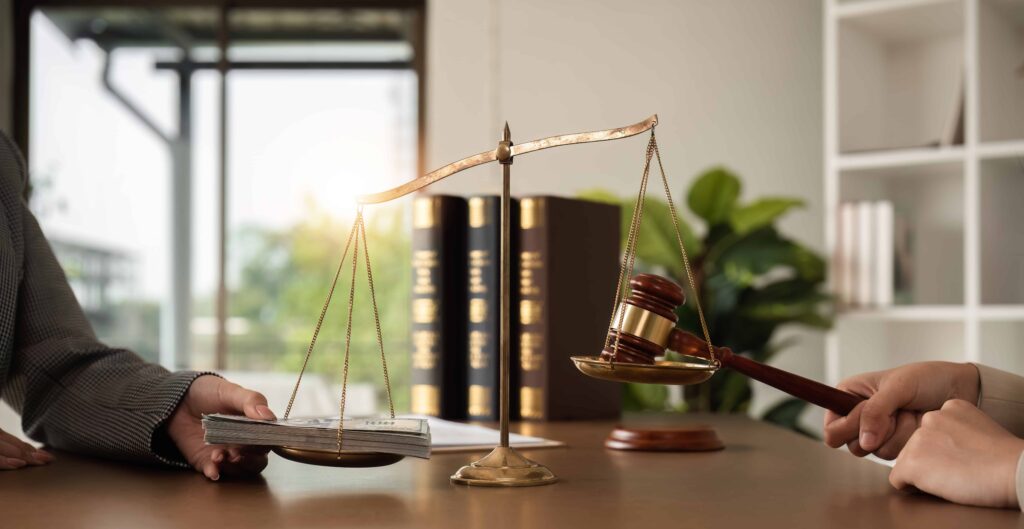
When you're injured because someone else was careless, a personal injury claim is the legal tool for pursuing the financial resources you need. The goal is to cover all the losses you have suffered.
In Minnesota, this compensation, called "damages," falls into two main categories.
Economic Damages
These are the tangible, calculable costs tied directly to the accident.
- Medical Expenses: Covers everything from the ambulance ride and emergency room care to future surgeries, physical therapy, and medication.
- Lost Income: Replaces the wages you lost while out of work.
- Diminished Earning Capacity: If your injuries prevent you from returning to your former career, this compensates for the difference in income over your lifetime.
- Property Damage: Pays for the repair or replacement of your motorcycle and any damaged gear.
Non-Economic Damages
These damages address the human cost of the wreck—the very real harm that doesn't come with a receipt.
- Pain and Suffering: For the physical pain and emotional distress your injuries have caused.
- Permanent Disfigurement: Compensation for scars or other lasting changes to your appearance.
- Loss of Quality of Life: Addresses your inability to participate in hobbies, daily activities, or life as you knew it before the accident.
What Are the Most Common Injuries in a Motorcycle Wreck?
Without the protection of a steel frame, motorcyclists face the risk of severe, catastrophic injuries, such as:
- Road Rash: This is a friction burn that can strip away layers of skin, embedding dirt and gravel into the wound and sometimes requiring skin grafts. It is intensely painful because it damages a wide area of nerve endings.
- Traumatic Brain Injuries (TBIs): A forceful impact to the head can cause the brain to strike the inside of the skull, leading to a traumatic brain injury. TBIs range from concussions to severe injuries that can cause permanent cognitive changes, memory problems, personality shifts, and lifelong disability.
- Spinal Cord Injuries: The violent force of a crash can damage the spinal cord, potentially causing permanent paralysis. Even incomplete spinal injuries may lead to chronic pain, loss of bladder or bowel control, partial paralysis, and other lifelong complications that rewrite every aspect of life.
- Broken Bones and Fractures: It is extremely common for riders to suffer broken bones in their arms, legs, ribs, and pelvis. So-called "Biker's Arm" happens when a rider instinctively puts their arms out to break a fall, leading to severe fractures and permanent nerve damage.
How Does Minnesota's "Comparative Fault" Rule Affect Your Claim?
Insurance companies will look for any reason to argue that you share some blame for the accident. This is because Minnesota uses a modified comparative fault rule.
Simply put, the amount of compensation you can receive is reduced by your percentage of fault. For example, if a jury determines you were 10% at fault, your total award would be cut by 10%.
If you are found to be 51% or more at fault, you cannot recover any compensation at all.
Our job is to use evidence, such as police reports, witness statements, and accident reconstruction, to build a powerful case that minimizes any fault unjustly assigned to you.
Understanding the Rules for a Minnesota Motorcycle Claim
The legal process for motorcycle accidents has some key differences from typical car accident claims.
Is Minnesota a "No-Fault" State for Motorcycles?
Yes, but there's a catch. Minnesota's no-fault law requires drivers to carry Personal Injury Protection (PIP) to cover their own initial medical bills, regardless of who caused the crash.
Here is the exception: The law does not consider a motorcycle to be a "motor vehicle," so motorcyclists are not required to carry PIP coverage. When standard PIP coverage does not apply to your accident, you must seek payment for your medical bills directly from the at-fault driver's insurance company or any available Medical Payments (MedPay) coverage from the start.
How Long Do You Have to File a Claim? The Statute of Limitations
For most negligence cases in Minnesota, you have six years from the date of the accident to file a lawsuit. This is known as the statute of limitations.
Six years sounds like plenty of time, but waiting is a mistake. With each passing week, evidence can be lost, witness memories fade, and building a strong case becomes more difficult. If your claim involves a government employee or vehicle, you may have to provide formal notice in as little as 180 days.
How Insurance Companies View Motorcycle Claims

You might expect the at-fault driver's insurance company to promptly offer a fair settlement. It is helpful to remember their purpose: they are a business, which means they focus on their bottom line over your need for a well supported recovery.
This business model shapes how they handle your claim:
- They conduct a thorough investigation. The adjuster's job is to gather all the facts, and they will look for any evidence to argue you were at fault. Our role is to keep them accountable and ensure no amount of blame is unjustly put on you.
- They will likely offer you an initial settlement far less than what you may be eligible for under the policy and the law. An insurer might present a quick settlement before the full extent of your injuries and future medical needs are clear. This early offer is almost always far less than the true value of your claim.
- They will ask for a recorded statement. You are not obligated to give one to the other driver's insurance company. Adjusters are trained to ask questions that might get you to say something that could weaken your claim. It is best to decline until you have legal advice.
- The process can be long and frustrating. The claims process is filled with tedious paperwork. It’s easy to get frustrated and feel pressured to accept a lower offer as bills pile up. Nicolet Law Accident & Injury Lawyers is ready to help you fight legal obstacles that threaten the maximum compensation you may be entitled to under the law.
What You Can Do from Home to Protect Your Claim
While we handle the legal work, there are practical steps you can take to strengthen your case.
- Follow your doctor's treatment plan. Go to every appointment, take all prescribed medications, and complete your physical therapy. Gaps in treatment give the insurer an opening to argue your injuries are not as serious as you claim.
- Keep a detailed folder. Save every medical bill, receipt, repair estimate, and piece of mail from the insurance companies.
- Document your daily experience. Write a few notes each day about your pain, physical challenges, and how the injuries are affecting your life. The more thorough and detailed, the better. This journal can become a powerful record of your pain and suffering.
- Stay off social media. Insurance investigators will review your public profiles. A photo of you at a family barbecue could be twisted to suggest you've recovered, even if you were in pain the entire time. It's safest to stop posting until your case is resolved.
If you are confused or unsure about what you can do to support Nicolet Law in fighting for the compensation you may be eligible for, reach out to schedule a free case evaluation. We are happy to assist you in positing a claim for the maximum motorcycle accident injury settlement possible.
Minnesota Motorcycle Accident FAQ
What if the police report unfairly blames me?
Police officers sometimes assume the rider was speeding or weaving when there’s little proof. You can still build a strong case. Accident reconstruction experts, eyewitness statements, and nearby camera footage may be able to provide additional insights into what happened and can counter false narratives that threaten your total compensation award.
Can I file a claim if I wasn’t wearing a helmet?
Yes. Minnesota law requires helmets only for riders under 18 or with a learner’s permit. Even if you weren’t wearing one, you can still pursue compensation. The insurance company may try to argue that not wearing a helmet made your injuries worse. That argument will typically only address any head injuries you sustained, not your role in the accident itself.
How do you prove the other driver didn’t see the motorcycle?
We gather traffic-camera or dash-cam footage, phone records, and vehicle black-box data to show whether the driver was distracted or failed to yield. Eyewitness accounts and intersection visibility studies, which examine how much, if any, obstruction or hazards the drivers had leading up to the collision, also help demonstrate that the driver wasn’t paying proper attention.
What if a road hazard or poor maintenance caused the crash?
If a pothole, loose gravel, or construction debris caused your accident, the responsible city, county, or contractor may be liable. Claims involving public entities have strict notice deadlines—sometimes just 180 days—so early investigation is essential.
Can a passenger on my bike file a separate claim?
Yes. Passengers have their own right to compensation and may bring claims against the at-fault driver or, in some cases, the motorcycle operator if partial fault lies there. Each person’s injuries and damages are handled individually.
Does motorcycle insurance cover custom parts or gear?
Standard motorcycle policies usually limit coverage for accessories and gear. You can add optional accessory coverage for helmets, jackets, or aftermarket parts. After an accident, it’s worth checking your policy’s limits before accepting a settlement that undervalues your property damage.
Don't Let a Stereotype Decide Your Future. Contact Nicolet Law After a Minnesota Motorcycle Accident for Comprehensive and Compassionate Legal Support
You are injured because another driver made a mistake. Your choice of vehicle doesn't change that fact.
But the unfair bias against motorcyclists means you have to be smarter and more prepared than the difficult insurance companies ready to diminish or deny your claim.
Proving your case and navigating Minnesota's unique insurance laws requires a focused, evidence-based approach from a team that knows the challenges you face.
Let us handle the legal strategy so you can focus on healing. We know how to counter stereotypes with facts and push back against insurer tactics like unfair blame assignment with aggressive legal advocacy and strong evidence.
If you're ready to learn how we can help, the conversation is free and confidential. Call 1-855-NICOLET or message our Minnesota motorcycle accident lawyers online to schedule a free case evaluation exploring your legal rights and options..
Minneapolis Office
Address: 43 SE Main Street, Suite #500,Minneapolis, MN 55414
Phone: (612) 888-8258