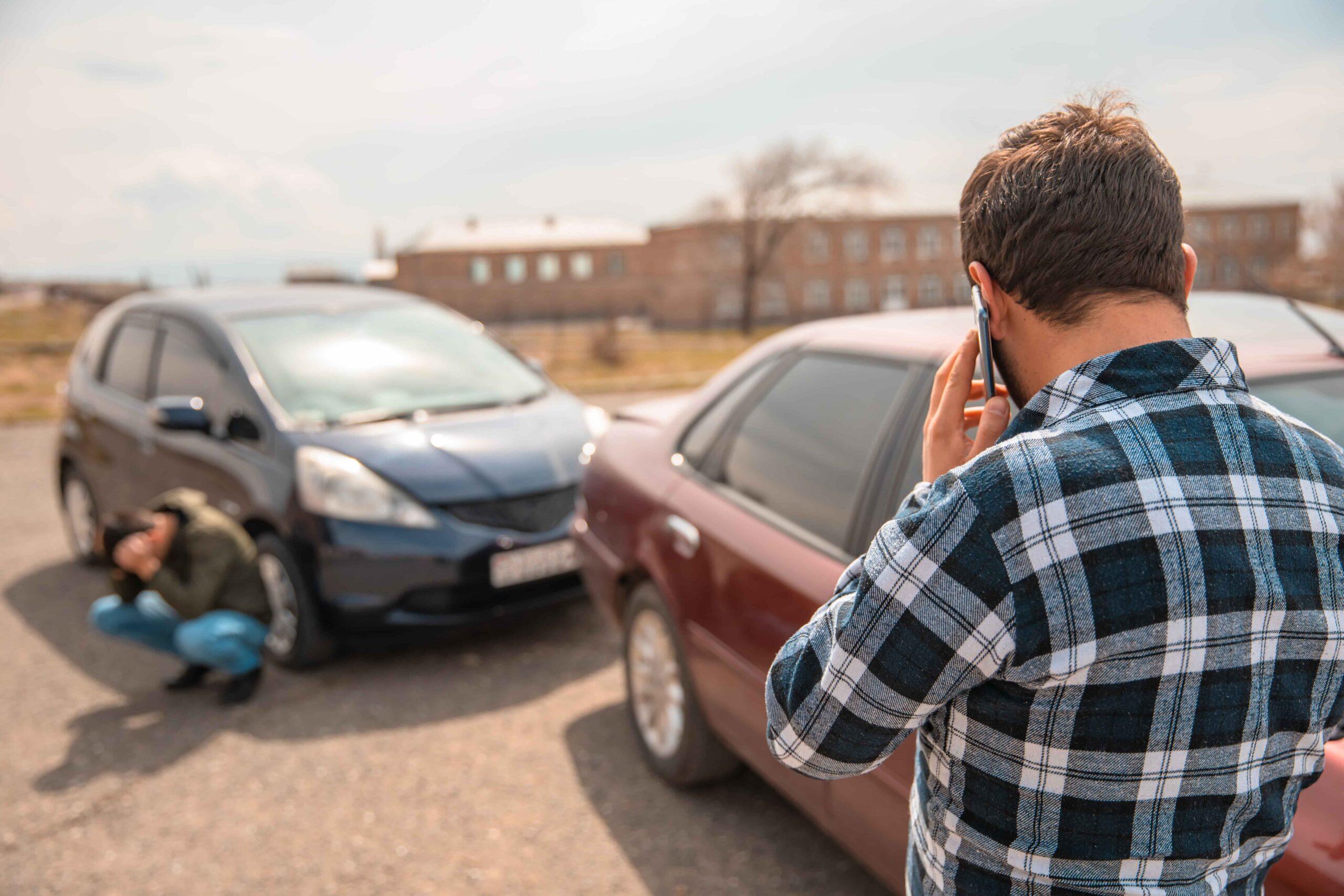
- Does Being a Passenger Give You the Right to Sue After a Car Accident?
- Key Takeaways About Injured Passenger Car Accident Claim
- Passenger Crash Data and Why It Matters
- What Rights Does an Injured Passenger Have After a Car Accident?
- Who Pays for Passenger Injuries in a Car Accident?
- Can a Passenger Sue the Driver of the Car They Were Riding In?
- What Makes Passenger Injury Claims Complicated Without Legal Help?
- What Filing Deadlines Apply to Passenger Injury Claims?
- What Compensation Can an Injured Passenger Pursue?
- When Is It Time To Talk With a Lawyer After a Passenger Injury?
- FAQs About Injured Passenger Car Accident Claims
- You Were Not Behind the Wheel. You Should Not Be Left Carrying the Cost.
- Legal Resources for Injured Passenger Claims
An injured passenger in a car accident has distinct legal rights from those of either driver involved. If you had no control over the crash, that means fault rarely attaches to your conduct, and your claims may reach across several insurance policies at once. Nicolet Law Accident & Injury Lawyers represents injured passengers and their families across Wisconsin, Minnesota, North Dakota, and Iowa, and these cases consistently involve a different set of insurance and liability considerations than standard two-driver claims.
A free consultation with a Nicolet Law attorney can clarify which policies apply to your situation and what your realistic options are.
Does Being a Passenger Give You the Right to Sue After a Car Accident?
Yes. An injured passenger in a car accident generally has the right to pursue compensation from one or more at-fault drivers, and you may be able to file claims against multiple insurance policies simultaneously. Because passengers generally have no control over how a vehicle is driven or what happens on the road, fault rarely applies to them, which typically puts them in a stronger legal position than either driver from the moment the crash occurs. Working through those claims, from identifying all available coverage to managing competing insurers, usually involves a lawyer guiding several connected stages, not a single call or form.

Key Takeaways About Injured Passenger Car Accident Claim
- Passengers rarely bear fault for a crash: As a passenger, you likely had no control over the vehicle or road conditions. That lack of fault can strengthen your position and help you pursue compensation. Your claims go against the at-fault driver or drivers, not against your own conduct. Nicolet Law attorneys can identify all parties whose negligence contributed and build a claim that holds each accountable.
- Multiple insurance policies may apply to a single passenger injury claim: Depending on the circumstances, compensation may be available through the at-fault driver's liability insurance, the insurance policy covering the vehicle you were in, and your own auto insurance. Additional coverage, such as Medical Payments coverage, often called MedPay, or uninsured motorist (UM) coverage can apply even when you were not driving. In Minnesota, no-fault Personal Injury Protection (PIP) benefits under Minn. Stat. § 65B.44 may pay first through your own or the vehicle owner's policy. The same rule applies in North Dakota. Nicolet Law attorneys can review every potentially applicable policy so nothing is overlooked.
- You can file a claim against the driver of the vehicle you were in: A claim against a friend's or family member's insurance is almost always a claim against the policy, not the person. Wisconsin's direct action statute allows passengers to pursue an insurer directly in some situations. Nicolet Law attorneys can handle these situations with care while fully protecting your legal rights.
- Deadlines differ significantly across the four states where Nicolet Law practices: Wisconsin allows three years from the date of injury under § 893.54. Minnesota allows six years under § 541.05. Iowa allows two years, the shortest window of the four states. North Dakota allows six years but applies a 50 percent fault bar rather than the 51 percent bar used in the other three states. In no-fault states, PIP notice requirements may impose even earlier internal deadlines for submitting benefit claims. Nicolet Law attorneys can track every applicable deadline from the first consultation.
Passenger Crash Data and Why It Matters
The National Highway Traffic Safety Administration (NHTSA) consistently reports that passenger vehicle occupants account for the largest share of motor vehicle crash fatalities in the United States each year. Passengers absorb the same crash forces as the driver, often with none of the control — no ability to brake, steer, or respond to what is developing ahead.
Nicolet Law's analysis of 15 years of federal crash data found that passenger injury and fatality risk varies significantly by state, with several Midwest states presenting higher risk profiles than national averages. Rural road networks, higher speed limits, and longer emergency response times all contribute to crash severity across Wisconsin, Minnesota, North Dakota, and Iowa.
- National fatality volume: Tens of thousands of passenger vehicle occupant deaths are recorded annually in NHTSA data, reflecting how often serious crashes affect people who had no role in causing them.
- State-by-state variation: The Nicolet Law passenger risk study identified meaningful differences across states, with Midwest rural corridors including I-94, I-35, and I-380 seeing a disproportionate share of serious crashes.
- No control, full exposure: Because passengers play little to no role in mitigating a developing collision, the financial and legal consequences of a crash fall on them entirely, often through no fault of their own — which is exactly why understanding the available claims matters.
What Rights Does an Injured Passenger Have After a Car Accident?

As a passenger, you have the right to pursue compensation from any driver whose negligence caused the crash, and unless it can be argued that you interfered with the driver, fault almost never applies to you. That puts you in a stronger legal position than either driver from the moment the collision happens.
In Wisconsin and Iowa, fault-based states, your claims go directly against the at-fault driver's liability insurance. In Minnesota and North Dakota, no-fault rules require PIP benefits to pay first, with a liability claim available after a certain threshold. Under Minn. Stat. § 65B.51, a liability claim is possible once medical expenses exceed $4,000 or injuries meet the verbal threshold for serious harm. In North Dakota, there is a similar verbal threshold for serious harm, with medical expenses needing to exceed $2,500 to file an at-fault claim. Nicolet Law attorneys can identify every liable party and all applicable coverage from the start.
Who Pays for Passenger Injuries in a Car Accident?
Several insurance sources may apply to a passenger injury claim, depending on the state, the vehicles involved, and what coverage each driver carries.
| Insurance Source | States/Applicability | Description/Purpose |
|---|---|---|
| At-fault driver's liability insurance | All 4 states | Primary source in at-fault states when another driver caused the crash. Covers medical costs, lost wages, and pain and suffering once fault is established. Comes after PIP coverage in no-fault states. |
| PIP benefits | MN + ND (no-fault states) | Personal Injury Protection pays first regardless of fault. Up to $20,000 in medical and $20,000 in non-medical benefits in Minnesota under § 65B.44. |
| Your own MedPay | All 4 states (optional add-on) | Medical Payments coverage on your own policy pays for medical costs regardless of fault, even when you were a passenger in someone else's vehicle. |
| UM / UIM coverage | Backup source | Uninsured and underinsured motorist coverage fills the gap when the at-fault driver has no insurance or insufficient policy limits to cover your losses. |
Not all sources apply in every case. A Nicolet Law attorney can review all applicable policies before any settlement discussions begin.
The at-fault driver's liability insurance
When another driver caused the crash, their bodily injury liability coverage is typically the first source of recovery for a passenger's medical costs, lost wages, and other losses. When two drivers share fault for the crash, passengers may be able to pursue both drivers' insurers simultaneously — without any portion of that comparative fault applying to them if they carried no fault.
The driver of the vehicle you were riding in
If the person who gave you a ride bears some or all of the fault for the crash, their liability insurance is a potential source of your recovery. Many passengers feel uncomfortable filing a claim against a friend's or family member's insurance, but it is important to understand that the claim is against the policy, not the person's personal finances. Liability insurance exists precisely for this purpose.
Your own auto insurance policy
Even as a passenger in someone else's vehicle, your own auto insurance may provide relevant coverage. MedPay pays for medical expenses after a crash regardless of fault and can apply even when you were not driving. In Wisconsin, MedPay is a common add-on that provides quick access to medical cost reimbursement before a liability claim resolves.
In Minnesota and North Dakota, your own PIP benefits may be triggered as a passenger if you do not have access to PIP through the vehicle owner's policy. Reviewing your own policy is a step many passengers skip that can make a meaningful difference.
Uninsured and underinsured motorist coverage
If the at-fault driver has no insurance or not enough insurance to cover your losses, your own UM or underinsured motorist (UIM) coverage may provide additional recovery. Minnesota law requires insurers to offer this coverage. In Wisconsin, uninsured coverage is mandatory while underinsured coverage is not, though it is widely available. These policies become critical when the at-fault driver's policy limits are low relative to serious injuries.
Nicolet Law attorneys can map every potentially applicable source of coverage before any insurance negotiations begin.
Can a Passenger Sue the Driver of the Car They Were Riding In?
Yes. A claim against the driver who gave you a ride can be legally available whenever their negligence contributed to the crash, whether that person is a stranger, a coworker, or a family member.
Almost always, the claim goes against their insurance policy, not their personal finances. One exception to review is the household exclusion clause, which some policies use to limit coverage for people living with the policyholder. When that applies, coverage through your own policy may still be available. Wisconsin's direct action statute also allows passengers to pursue the insurer directly in some cases. A Nicolet Law attorney can review the specific policy language and explain what options exist.
What Makes Passenger Injury Claims Complicated Without Legal Help?
Passengers often expect their claims to be straightforward because they were not at fault. In practice, several factors make these claims genuinely difficult to navigate without legal support.
Multiple insurers with conflicting interests
When two drivers share fault for a crash, their respective insurance companies have competing interests. Each insurer works to minimize their own policyholder's liability, and neither has an incentive to ensure that a passenger recovers from all available sources. Caught between them, a passenger may receive conflicting information, delayed responses, and pressure to settle from whichever insurer moves first.
Low initial offers before injuries are fully documented
Insurers often contact injured passengers quickly with recovery offers. Those early amounts reflect minimal information — typically before the full scope of injuries, required treatment, or long-term costs is understood. Accepting early permanently closes the door on future claims, including ongoing and future medical needs.
Seatbelt defense arguments
In some cases, an insurer may argue that a passenger's failure to wear a seatbelt worsened their injuries and should reduce the amount owed. Wisconsin, Minnesota, Iowa, and North Dakota all require seatbelt use. How much this argument affects a specific passenger's claim depends on the medical evidence and how the applicable state law applies. Nicolet Law attorneys know how to counter these arguments and limit their effect on a passenger's recovery.
Rideshare and commercial vehicle complexity

When the crash involved an Uber, Lyft, or other rideshare vehicle, or a commercial truck or employer's vehicle, the insurance coverage picture is significantly more complex. Rideshare companies carry commercial liability policies that apply at different levels depending on whether the driver was actively transporting a passenger, traveling to a passenger, or waiting for a ride request at the time of the crash. Nicolet Law attorneys are familiar with how rideshare and commercial vehicle coverage works and what claims passengers may have at each coverage level.
Coverage gaps and policy limit shortfalls
When the at-fault driver's liability limits are insufficient to cover serious injuries, a passenger is left with a gap. Identifying and accessing UM/UIM coverage through the right policy, in the right state, requires both an understanding of applicable insurance rules and careful review of how each state's laws interact with policy language.
Nicolet Law attorneys can take over communication with all insurers involved, gather and preserve evidence, work with medical professionals to document the full scope of injuries, and build claims that reach every available source of recovery.
What Filing Deadlines Apply to Passenger Injury Claims?
The deadline to file a personal injury lawsuit follows the rules of the state where the crash occurred.
Wisconsin allows three years under § 893.54. Iowa allows two years — the shortest window of the four states Nicolet Law serves. Minnesota and North Dakota each allow six years, with Minnesota's deadline set under § 541.05. In both no-fault states, PIP benefits must also be submitted to your insurer promptly after the crash, separate from the lawsuit deadline. Missing the PIP notice window can affect benefits even when the full filing period is still open.
Deadlines have limited exceptions. Speaking with a lawyer promptly after a crash is the safest way to protect every option.
What Compensation Can an Injured Passenger Pursue?
Injured passengers may pursue several categories of compensation depending on injury severity, applicable state law, and available coverage.
Medical expenses can cover emergency care, hospitalization, surgery, physical therapy, prescriptions, and future treatment tied to the crash.
Lost wages and earning capacity address income lost during recovery and any lasting limitation on the ability to work.
Pain and suffering and other non-economic losses are available directly in Wisconsin and Iowa, and in Minnesota and North Dakota once the tort threshold is crossed. In wrongful death cases, surviving family members may pursue funeral costs, lost financial support, and loss of companionship under each state's statutes.
Insurers routinely challenge future costs and non-economic losses. Nicolet Law attorneys can work with medical professionals to document these amounts and present them accurately.
When Is It Time To Talk With a Lawyer After a Passenger Injury?
Legal guidance matters most when injuries are serious, multiple insurers are involved, or any party is moving toward a quick resolution before the full picture is clear.
Contact a Nicolet Law attorney when:
- Your injuries have required hospitalization or are affecting your ability to work
- More than one vehicle was involved, or fault is disputed
- A insurance offer arrived before treatment was complete
- The at-fault driver was uninsured or underinsured
- The crash involved a rideshare, commercial truck, or work vehicle
- The accident happened near state lines.
Nicolet Law attorneys provide clarity at no upfront cost. A free consultation is about understanding your full options before making any decisions.
FAQs About Injured Passenger Car Accident Claims
What if I was injured as a passenger and the at-fault driver left the scene?
A hit-and-run crash, where the at-fault driver flees and cannot be identified, does not eliminate a passenger's right to compensation. Your own uninsured motorist (UM) coverage may apply to cover your losses when the responsible driver cannot be held accountable through a liability claim. In some states, the driver whose vehicle you were in may also have coverage that applies. A Nicolet Law attorney can identify what coverage is available and guide you through a UM claim.
Can I file a passenger injury claim without a police report?
A police report is not legally required to file a personal injury claim, but its absence can complicate the process. A report creates an official record of how the crash occurred, identifies the parties involved, and notes any citations issued at the scene. Without one, proving the basic facts of the crash depends more heavily on witness statements, medical records, and physical evidence. A Nicolet Law attorney can advise on how to build a strong claim given the documentation you have.
What if I was injured as a passenger in a family member's vehicle?
You can still file a claim, but family exclusion clauses in some auto policies can affect your options. If you live in the same household as the driver whose vehicle you were in, their policy may limit or exclude coverage for you specifically. A Nicolet Law attorney can review the specific policy language, determine whether the exclusion applies, and identify alternative coverage sources including your own policy's MedPay or UM benefits.
What if I was a passenger in a vehicle being used for work?
Workers' compensation coverage may apply alongside a personal injury claim if you were riding as a passenger in the course of your employment when the crash occurred. The interaction between a workers' compensation claim and a personal injury claim against a third-party driver can be legally complex. Nicolet Law attorneys work through these situations to identify what claims are available and how they interact so nothing is missed.
How long does a passenger injury claim typically take to resolve?
It depends on the severity of injuries, the number of insurers involved, and whether the claim resolves through negotiation or litigation. A claim with clear liability, a single insurer, and cooperative handling may resolve within several months. Cases with serious injuries, multiple defendants, or disputed facts can take a year or significantly longer. Nicolet Law attorneys can provide realistic timelines based on the specific facts of each case and keep clients informed throughout.
You Were Not Behind the Wheel. You Should Not Be Left Carrying the Cost.

The crash was not your call.
You did not choose to be in a crash. You did not have the opportunity to brake, steer, or avoid what happened. A serious injury still brings the same financial pressure: medical bills, missed work, and long-term costs that few are prepared for.
Insurance companies are not on your side.
When multiple insurers are involved in a passenger injury claim, each one is protecting their own policyholder, not you. Without someone pushing back on all fronts at once, it is easy to settle with one insurer while leaving valid claims against others untouched.
Nicolet Law can identify every source of recovery.
Nicolet Law Accident & Injury Lawyers has a strong track record representing injured passengers across Wisconsin, Minnesota, North Dakota, and Iowa. Our attorneys can map every available source of coverage, take over all insurer communication, and build claims that reflect the full cost of what the crash has caused.
To discuss your situation, contact Nicolet Law for a free case evaluation. You do not pay attorney's fees unless we recover money for you. Call 1-855-NICOLET or reach us online.
Injured? Get Nicolet.
Legal Resources for Injured Passenger Claims
The resources below are attorney-curated materials for passengers who have been injured in a car accident and want to understand their legal options. They are educational background, not substitutes for advice tailored to your specific situation.
- The Riskiest States for Passengers: We Analyzed 15 Years of Crash Data
- What to Do After a Car Accident
- How Minnesota's No-Fault Insurance Affects Your Car Accident Claim
- What Is the Average Payout for a Personal Injury Claim in the USA?
- What Percentage Do Most Personal Injury Lawyers Take?
To talk through your specific situation with a personal injury attorney, contact Nicolet Law online or by calling 1-855-NICOLET for a free consultation.