
- How Do Distracted Drivers Put Motorcyclists at Risk, Especially During Rush Hour?
- Key Takeaways About Distracted Drivers and Motorcycle Safety
- Key Statistics About Distracted Driving and Motorcycle Accidents
- What Counts as Distracted Driving?
- Why Are Motorcyclists More Vulnerable to Distracted Drivers?
- How Does Rush Hour Concentrate the Risk?
- What Types of Accidents Do Distracted Drivers Most Often Cause?
- What Legal Issues Come Up When a Distracted Driver Hits a Motorcyclist?
- What Filing Deadlines Apply to Distracted Driving Motorcycle Claims?
- What Compensation May Be Available After a Distracted Driving Crash?
- When Should a Motorcyclist Talk With a Lawyer After a Distracted Driver Crash?
- FAQs About Distracted Drivers and Motorcyclists
- Legal Resources for Motorcycle Accident Claims in the Midwest
Distracted driving puts every road user at risk, but motorcyclists face a specific, heightened risk. A motorcycle occupies a narrow profile in traffic. It produces less visual noise than a car or truck, and when a collision occurs, there is little to no structural protection for the rider. The combination of a small visual target and no crash protection means the split-second of driver distraction can have devastating consequences for a rider.
According to the National Highway Traffic Safety Administration's research on distracted driving in 2023, distraction-affected crashes killed 3,275 people and injured an estimated 324,819 others in a single year. Despite continued improvements in car safety and widespread awareness of the risks, distracted driving remains a consistent feature of American roads. Distracted driving and the crashes that result are most concentrated during the evening commute, when driver attention is at its lowest and traffic is at its heaviest.
Nicolet Law handles motorcycle accident claims in Wisconsin, Minnesota, North Dakota, Iowa, Indiana, Illinois, and Michigan. Our firm includes registered medical professionals on staff and attorneys who have worked inside insurance companies. That means we know how to read medical charts, and we have direct insight into how insurers evaluate distracted driving claims and where they try to shift blame.
If a distracted driver caused your motorcycle accident, contact Nicolet Law at 1-855-NICOLET for a free consultation. You do not pay attorney's fees unless money is recovered for you.
How Do Distracted Drivers Put Motorcyclists at Risk, Especially During Rush Hour?
A distracted driver is a driver whose attention has left the road, even briefly. For a motorcycle rider sharing that road, that driver's inattention can mean a missed brake, a failed check before changing lanes, or a left turn executed without seeing the oncoming rider. Attorneys at Nicolet Law represent injured motorcyclists in Wisconsin, Minnesota, North Dakota, Iowa, Indiana, Illinois, Michigan, and know what distracted driving crashes look like in evidence, medical records, and the arguments insurers use to avoid paying for them.
Key Takeaways About Distracted Drivers and Motorcycle Safety
- Distracted driving is a leading documented cause of thousands of deaths per year, not just a minor contributing factor: NHTSA recorded 3,275 deaths and an estimated 324,819 injuries in distraction-affected crashes in 2023. Eight percent of all fatal crashes in 2023 were classified as distraction-affected.
- Motorcyclists are especially vulnerable because of their physical profile and lack of structural protection: A rider who is not seen is not avoided. And a collision that a car occupant survives with soft tissue injuries may cause a catastrophic injury to a motorcyclist. This asymmetry shapes both the medical trajectory of these cases and the legal strategy for pursuing full recovery.
- Filing deadlines run regardless of how long a claim investigation takes: Wisconsin allows three years under Wis. Stat. § 893.54. Iowa allows two years under Iowa Code § 614.1(2). Minnesota and North Dakota typically run six-year timelines. Indiana and Illinois have two-year deadlines, while Michigan has a three-year deadline. Attorneys at Nicolet Law can identify and track these windows from the start of every case.
Key Statistics About Distracted Driving and Motorcycle Accidents
The data provides a clear national picture of how serious and how widespread these crashes are.
- According to NHTSA's distracted driving awareness materials, sending or reading a text message takes a driver's eyes off the road for approximately 5 seconds. At 55 miles per hour, they would cover the length of a football field.
- Five percent of all drivers involved in fatal traffic crashes in 2023 were reported as distracted at the time. Among drivers aged 15 to 20, that figure rose to 7 percent, the highest of any age group.
- NHTSA data shows that motorcyclists die at nearly 28 times the rate of passenger vehicle occupants per vehicle mile traveled.
For a state-by-state breakdown of when and where riders face the highest rush-hour risk, see which state has the worst rush hours for motorcyclists in the U.S.?
What Counts as Distracted Driving?
The public conversation about distracted driving focuses heavily on texting and phone use. But driver distraction is broader than that, and understanding its full range matters when building a case.
Is Texting the Only Form of Dangerous Distraction?
No. NHTSA defines distracted driving as any activity that diverts attention from the task of driving. This includes:
- Texting
- Talking on a handheld phone
- Eating
- Adjusting a navigation system
- Talking to passengers
- Reaching for items in the vehicle
- Any other activity that takes the driver's eyes, hands, or mental focus away from the road
For legal purposes, the relevant question is not just whether the driver was on a phone. It is whether the driver failed to exercise reasonable care at the moment of the crash, and whether that failure caused the collision. Phone records can support a distracted driving claim. So can dashcam footage, witness accounts, and the physical evidence of a crash in which a driver gave no indication of braking or reacting before impact.
Which Types of Distraction Are Most Dangerous for Motorcyclists?

Visual distraction, which takes a driver's eyes off the road, is the most directly dangerous for motorcyclists. A rider who is not looked at cannot be seen. In stop-and-go traffic, a driver checking a phone for even a few seconds may close the gap to a stopped motorcyclist entirely. In moving traffic, a driver who looks down and drifts into an adjacent lane may not see the rider until after the collision.
Cognitive distraction, which takes a driver's mental attention from the road even when their eyes remain forward, also contributes to late reaction times and poor gap judgments. A driver who is mentally engaged in a phone conversation while technically looking at the road may still fail to process a motorcyclist in their visual field.
Why Are Motorcyclists More Vulnerable to Distracted Drivers?
Does a Motorcycle's Small Profile Make It Harder to See?
Yes. Motorcycles occupy a fraction of the visual space that a car or truck does. In heavy traffic, a motorcycle can disappear between other vehicles, especially when a driver is scanning broadly rather than looking carefully. Even car safety features that are supposed to alert drivers to nearby traffic can struggle to detect motorcycles. A distracted driver whose visual attention returns to the road after a few seconds may see the larger vehicles around the motorcycle without registering the motorcycle itself.
This is particularly acute in merging situations, at intersections, and anywhere a driver has to make a rapid assessment of oncoming or adjacent traffic. A glance that would catch a car may miss a motorcycle in the same lane.
How Does a Rider's Lack of Protection Change the Outcome of a Crash?
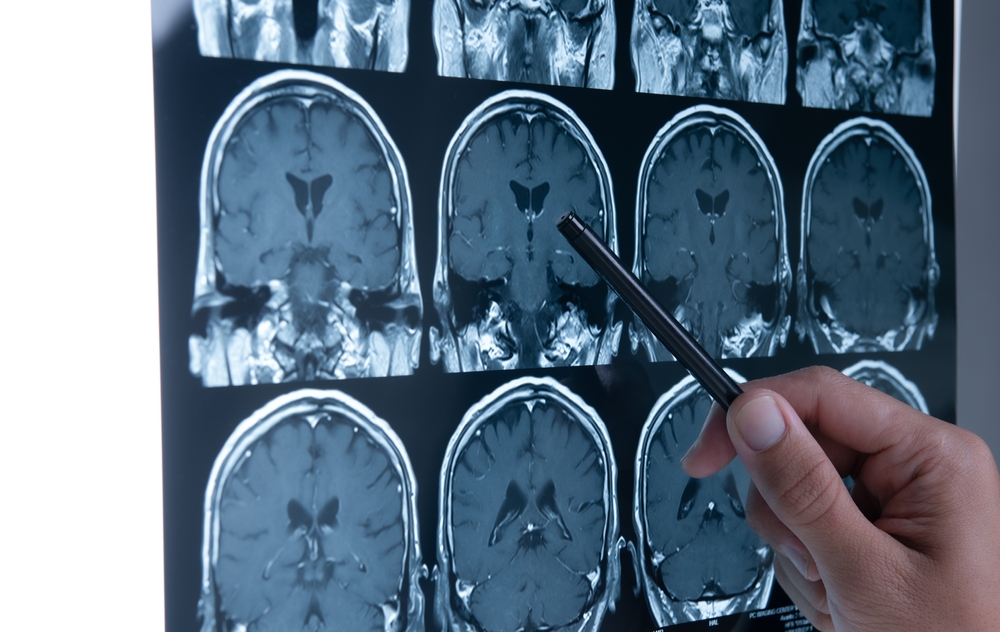
A driver who rear-ends another car at low speed in stop-and-go traffic may produce minor property damage and minor injuries. If a motorcycle takes the place of the other driver, that same low speed can throw the rider from the bike, cause the rider to be struck by the vehicle or the road, and result in fractures, traumatic brain injury (TBI), spinal injuries, or worse.
TBI refers to any disruption of normal brain function caused by an external force, and it is one of the most common serious injuries in motorcycle crashes.
A motorcycle's lack of structural protection means that the chances of severe injuries are significantly higher than in comparable car accidents.
How Does Rush Hour Concentrate the Risk?
What Happens to Driver Attention During the Evening Commute?
Driver attention is a finite resource that depletes over the course of a day.
After a full workday, drivers are more likely to:
- Make automatic and habitual decisions rather than active, careful ones
- Follow familiar routes on autopilot
- Reach for a phone at a red light or in slow traffic
- Miss visual details, such as a motorcyclist between lanes or at the edge of their peripheral vision, that demand active attention to catch
The evening commute window, roughly 3 p.m. to 7 p.m. on weekdays, is when these attention deficits are highest, and traffic volume is at its peak. Riders on Midwest commuter routes like I-94 near the Twin Cities, I-35 through Des Moines, or I-43 along the Wisconsin coast are sharing the road with large numbers of drivers in this condition.
Why Is Stop-and-Go Traffic Especially Dangerous for Riders?
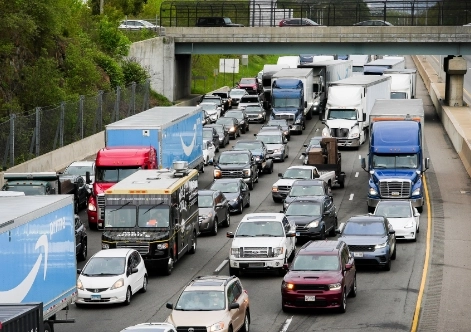
Stop-and-go traffic creates repeated cycles of deceleration and acceleration. For motorcyclists, these cycles create moments of high rear-end collision risk each time traffic stops. A driver who is following too closely and briefly distracted may not register that the motorcyclist ahead has stopped until the gap is already closed.
In Minnesota, riders have a legal option to move out of that stop-and-go risk by filtering between lanes when traffic is stopped. In Wisconsin, North Dakota, Iowa, Indiana, Illinois, and Michigan, where lane splitting remains illegal, riders must hold their position in traffic and rely on following drivers to maintain attention and safe following distances.
What Types of Accidents Do Distracted Drivers Most Often Cause?
Left-Turn Collisions
A driver executing a left turn across oncoming traffic must look, judge speed and distance, and decide whether the gap is safe. A driver who is mentally distracted, even with eyes nominally forward, may misjudge or fail to register a motorcycle's speed and proceed into a collision. Left-turn crashes are the most common type of fatal motorcycle accident involving two vehicles, and driver inattention is a documented contributing factor.
Rear-End Crashes in Stop-and-Go Traffic
A driver may be following a motorcyclist in traffic, but that doesn't mean they're paying attention. They may be looking at their phone, adjusting navigation, or mentally elsewhere and may not register that traffic has slowed or stopped until it is too late to brake. In a rear-end crash, the motorcyclist absorbs the full force of the impact. These crashes are preventable if the driver is paying attention. They are among the most serious in terms of rider injury when the driver is not.
Lane Change Collisions
A driver who changes lanes without fully checking mirrors and blind spots, or who checks but is cognitively distracted and fails to process what the check revealed, may move into a lane that a motorcyclist is already occupying. The result is a sideswipe or a direct collision that may push the rider out of the lane or cause the motorcycle to go down.
The narrow profile of a motorcycle makes it easier to miss in a quick mirror check, particularly for a driver whose attention is divided.
What Legal Issues Come Up When a Distracted Driver Hits a Motorcyclist?

Insurance companies often dispute distracted driving claims because distraction can be difficult to prove from the outside. Adjusters may question whether the rider contributed to the crash, challenge the sequence of events, or present a version of the accident that shifts blame.
Attorneys at Nicolet Law can investigate these claims by requesting phone records when applicable, gathering dashcam and surveillance footage, interviewing witnesses, and examining the physical evidence of the crash. They can also respond to the common insurer pattern of disputing injury severity, arguing that medical costs are excessive, or making an early settlement offer before the full extent of injuries is clear.
Nicolet Law takes injury documentation seriously, and with the support of registered medical professionals on staff, we work to build the foundation for pursuing compensation that reflects the actual medical impact.
What Filing Deadlines Apply to Distracted Driving Motorcycle Claims?

The statute of limitations for personal injury claims differs by state. Wisconsin sets a three-year deadline under Wis. Stat. § 893.54. Iowa allows two years under Iowa Code § 614.1(2). Minnesota and North Dakota typically have six-year deadlines. Indiana and Illinois give motorcycle riders two years, while Michigan riders have three. Claims involving government entities or publicly maintained roads often carry much shorter notice deadlines.
These windows run from the date of the crash, not from when a rider realizes the full extent of their injuries. Waiting to see how medical treatment progresses before consulting an attorney can allow critical evidence to disappear and important deadlines to pass.
What Compensation May Be Available After a Distracted Driving Crash?
Motorcyclists injured by distracted drivers may be able to pursue compensation for:
- General medical expenses
- Emergency care
- Surgery
- Hospitalization and rehabilitation
- Lost wages and reduced earning capacity when injuries prevent or limit the ability to work
- Pain, suffering, and other non-economic losses
- The cost of repairing or replacing the motorcycle
When a distracted driving crash causes a TBI or spinal injury, future medical costs and long-term care needs become a significant part of the claim. Insurance companies routinely challenge these future-cost categories. Attorneys can build documentation with medical records, input from medical professionals, and employment records to support the full value of the claim.
When Should a Motorcyclist Talk With a Lawyer After a Distracted Driver Crash?
Speaking with an attorney is worth considering early, particularly if the crash caused serious injuries, if the at-fault driver's insurer is already in contact, if an early settlement offer has arrived, or if there is any dispute about what happened. Evidence of distraction, including phone records and surveillance footage, can be time-sensitive. The sooner an attorney is involved, the more can be preserved.
Attorneys at Nicolet Law can assess each situation individually and explain what options may be available.
FAQs About Distracted Drivers and Motorcyclists
Can I still recover damages if I was not wearing a helmet at the time of the crash?
Helmet use may be raised as a factor in claims involving head injuries, depending on the state and the specific circumstances. Iowa does not have a universal adult helmet law. Wisconsin and Minnesota have helmet requirements for certain riders. Whether helmet use affects a specific claim depends on the injuries, the applicable state law, and the facts of the case. Even if you were not legally obligated to wear a helmet, insurance adjusters may argue that your choice impacted the severity of your injuries. An attorney can assess how it applies to your situation and build a case to support your recovery.
What if the distracted driver's insurance is disputing the cause of the crash?
Insurance disputes over cause are common in distracted driving cases. Adjusters may argue that the rider was speeding, was not visible, or contributed to the crash. Attorneys at Nicolet Law can investigate the crash, gather evidence, and build a documented response to insurer arguments that misrepresent what actually happened.
What if my crash happened during rush hour on a road I ride regularly? Does that matter?
The time, location, and conditions of the crash are all part of the evidence record. Rush-hour timing and the specific road conditions at the moment of impact can support a claim that the at-fault driver's behavior was particularly unreasonable given the demands of the environment. Attorneys can document these factors as part of the investigation.
What is the first thing I should do after a motorcycle crash involving a distracted driver?
Seek medical evaluation immediately, even if injuries seem minor. Symptoms of TBI, spinal injuries, and internal trauma can take hours or days to become apparent. Document the scene if possible: photographs, witness contact information, and the police report number. Avoid giving recorded statements to an insurer before speaking with an attorney. Contact Nicolet Law at 1-855-NICOLET as soon as you are able to discuss your options.
Legal Resources for Motorcycle Accident Claims in the Midwest
These resources provide additional context for riders and families handling the aftermath of a motorcycle crash involving a distracted driver.
- Wisconsin Motorcycle Accident Lawyers
- Minnesota Motorcycle Accident Lawyers
- North Dakota Motorcycle Accident Lawyers
- Iowa Motorcycle Accident Lawyers
- Fatal Motorcycle Accidents: Key Statistics, Legal Rights, and How to Protect Yourself
- What Causes Motorcycle Accidents?
- Is Lane Splitting Legal in the Midwest?
For guidance specific to your crash, contact the motorcycle accident lawyers at Nicolet Law online or at 1-855-NICOLET. The consultation is free, and you do not pay attorney's fees unless money is recovered for you.