- What happens if an uninsured driver hits you?
- Key Takeaways About Uninsured Driver Accidents
- How Common Are Uninsured Drivers?
- Is Your State At-Fault or No-Fault?
- What Does Uninsured Motorist Coverage Actually Cover?
- What Is the Difference Between Per Person and Per Accident Limits?
- How Does Comparative Negligence Affect Your Recovery?
- Can You Actually Recover From an Uninsured Driver?
- Was Anyone Else Liable for the Crash?
- What Is the Deadline to File a Claim? (uninsured claim has shorter deadline)
- FAQs About Uninsured Driver Accidents
- Legal Resources About Uninsured Driver Claims
Getting hit by an uninsured driver leaves you leaning on your own insurance and your state's laws, and sorting out that recovery usually takes a lawyer working through several stages: reading your policy, identifying every source of coverage, and pushing back when an insurer undervalues the claim.
Only one state, New Hampshire, does not require auto insurance. Even so, state insurance regulators report about one in seven drivers has no coverage. When one of them causes your crash, the person responsible may have no way to pay.
Nicolet Law represents injured people across Wisconsin, Minnesota, North Dakota, Iowa, Indiana, Illinois, and Michigan. Call 1-855-NICOLET for a free consultation. Phone lines are open 24/7, and you do not pay attorney's fees unless money is recovered for you.
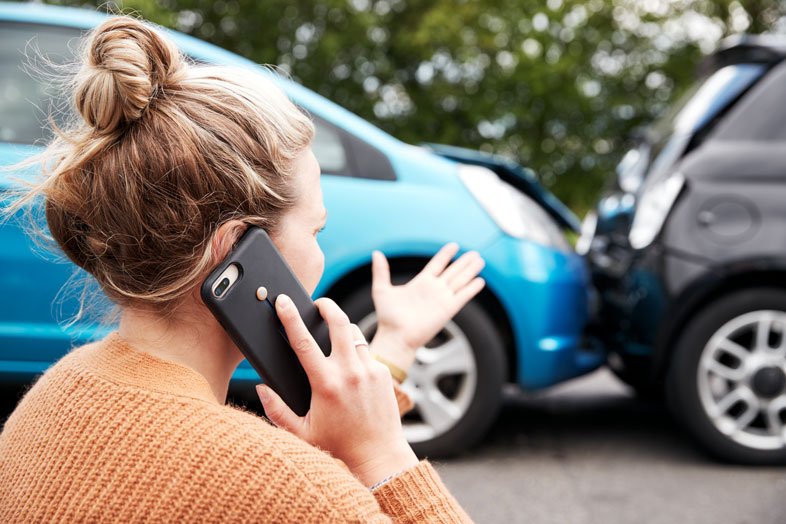
What happens if an uninsured driver hits you?
If an uninsured driver hits you, uninsured motorist (UM) coverage can usually become your main path to compensation, and in no-fault states, your Personal Injury Protection pays early medical bills first. What you recover depends on your policy and your state's laws. A lawyer from Nicolet Law can review your coverage whether your accident happened in Wisconsin, Minnesota, North Dakota, Iowa, Illinois, Indiana, or Michigan.
Key Takeaways About Uninsured Driver Accidents
- Your own uninsured motorist coverage is usually the main source of recovery: Of the seven states Nicolet Law serves, all but Michigan require insurers to offer UM coverage, which steps in when the at-fault driver has none.
- No-fault and at-fault states differ: Minnesota, North Dakota, and Michigan use no-fault rules, where your own Personal Injury Protection (PIP) pays first. Wisconsin, Iowa, Indiana, and Illinois are at-fault states.
- Filing deadlines are strict and vary by state: The deadline to file a claim with your own uninsured policy is much shorter than an at-fault claim, often requiring prompt reporting. The deadline to file an at fault claim is as follows: Wisconsin allows three years under Wis. Stat. § 893.54, Iowa two years under Iowa Code § 614.1(2), and Minnesota and North Dakota six years. Indiana and Illinois have two-year deadlines, while Michigan has a three-year deadline. Attorneys at Nicolet Law can track these from day one.
- Other parties may share liability: The vehicle's owner, an employer, a bar that over-served the driver, or a defective-part manufacturer could all be responsible. A lawyer looks beyond the uninsured driver to find coverage that actually exists.
How Common Are Uninsured Drivers?

Uninsured drivers are more common than many people expect, and the number has climbed every year since 2020.
- The NAIC reports 15.4 percent of motorists were insured in 2023, or about one in seven drivers. States like Maine were on the low end at 5.7 percent, with Mississippi on the high end at 28.2 percent.
- Counting drivers whose coverage is too thin for a serious crash, one in three (33.4 percent) was uninsured or underinsured in 2023, a 10 percentage point jump since 2017, per the Insurance Research Council.
- Underinsurance is the larger share of that problem, with 18.0 percent of drivers underinsured in 2023, meaning their liability limits fell below what their crash actually cost, according to the IRC's Uninsured and Underinsured Motorists: 2017–2023 report.
That second number matters as much as the first. A driver carrying Iowa's $20,000 minimum is technically insured, but that policy disappears fast against a hospital stay.
Is Your State At-Fault or No-Fault?
Your state's fault system decides whose insurance pays first. Three of the seven states covered here are no-fault; four are at-fault.
How Does the Process Work in Minnesota, North Dakota, and Michigan?
In no-fault states, your own coverage handles immediate medical bills and lost wages regardless of who caused the crash. In Minnesota, North Dakota, and Michigan, that coverage is Personal Injury Protection, or PIP, and it pays first no matter who was at fault.
Minnesota’s minimum PIP coverage provides up to $20,000 for medical costs and $20,000 for non-medical costs like lost wages, but nothing for pain and suffering. North Dakota’s minimum PIP coverage provides up to $30,000 for medical costs and certain other expenses. Michigan gives drivers six PIP options to choose from, with the “Unlimited” choice being selected if the driver does not actively choose any.

To pursue pain and suffering, your injuries must meet a minimum level set by law. Minnesota requires $4,000 in reasonable medical expenses, or permanent injury, disfigurement, or 60 days of disability, under Minn. Stat. § 65B.51. North Dakota's threshold is $2,500 in medical expenses, or serious and permanent disfigurement, dismemberment, or 60 days of disability. Michigan applies a three-part test, where an accident must be found to have created an injury that can be plainly seen by a doctor, affects an important part of the body, and changes your ability to lead a normal life. Minnesota's dollar figure is higher than North Dakota’s, but Michigan relies far more on the nature of the injury.
Meeting the threshold opens the door to a claim for pain and suffering. When the at-fault driver is uninsured, uninsured motorist coverage may step into that role, depending on the coverage purchased and the policy language.
How Does It Work in Wisconsin, Iowa, Indiana, and Illinois?
In at-fault states, the driver who caused the crash is responsible for the damages. When that driver is uninsured, uninsured motorist coverage can help cover the loss, and the injured person may still be able to pursue the driver through a lawsuit. The practical catch: a lawsuit often only helps if the driver has assets worth pursuing, which is often why they were uninsured to begin with.
What Does Uninsured Motorist Coverage Actually Cover?
Uninsured motorist coverage protects you and your passengers, and in most cases covers bodily injury rather than property damage. It pays medical bills but not your totaled car, though property damage may be recoverable through UM property damage or collision coverage.
Minimum uninsured limits in the seven states covered here are:
| State | Minimum per person | Minimum per accident |
|---|---|---|
| North Dakota | $25,000 | $50,000 |
| Wisconsin | $25,000 | $50,000 |
| Minnesota | $25,000 | $50,000 |
| Iowa | $20,000 | $40,000 |
| Indiana | $25,000 | $50,000 |
| Illinois | $25,000 | $50,000 |
| Michigan | Not mandatory in Michigan, any uninsured coverage will be customized | Not mandatory in Michigan, any uninsured coverage will be customized |
Iowa carries a wrinkle: insurers must include UM coverage matching minimum liability limits, but drivers can waive it in writing under Iowa Code § 516A. Indiana also allows drivers to waive this coverage. Nicolet Law strongly advises against waiving it.
What Is the Difference Between Per Person and Per Accident Limits?
The two limits cap different things. "Per person" is the most the policy pays for one individual's injuries. "Per accident" is the most it pays for everyone combined in a single crash.
Say three people in one car each have $25,000 in medical bills, for $75,000 total. Each stays within a $25,000 per-person limit, but the total exceeds a $50,000 per-accident cap. That second limit is often where recovery falls short. When losses run past it, a lawyer can identify what other coverage might close the gap.
How Does Comparative Negligence Affect Your Recovery?

Your recovery drops in proportion to your share of fault, and past a certain point it vanishes. Here is what that looks like with numbers. On a $100,000 claim, being 20% at fault means you recover $80,000. Being 40% at fault means you recover $60,000. In Wisconsin, Minnesota, Iowa, Indiana, and Illinois, if you are at 51% at fault you recover nothing at all.
Michigan carries a 51% rule as well, but allows drivers to recover economic damages beyond that threshold. A Michigan driver found 80% at fault would recover 20% of their economic damages but no non-economic damages.
North Dakota draws the line one step earlier: you must be under 50% at fault to recover. One you hit 50% fault, you cannot recover anything.
This gives an uninsured driver every incentive to shift blame onto you. Attorneys at Nicolet Law can document what actually happened so fault is assigned fairly.
Can You Actually Recover From an Uninsured Driver?
Sometimes, but it can be difficult, which is why your own coverage usually matters more. Drivers are frequently uninsured because they lack the money for insurance, and by extension the money to satisfy a judgment.
Where a driver does have assets, recovery may be possible through wage garnishment, property liens, or a structured payment arrangement. A lawyer can assess whether that is worth pursuing before you spend time chasing an empty judgment.
Was Anyone Else Liable for the Crash?
Often, yes. The uninsured driver may not be the only responsible party, and the others may carry insurance. A few questions open those doors.
Did Someone Else Own the Vehicle?
If the uninsured driver borrowed or leased the car, the owner's insurance may apply. Coverage often follows the vehicle, so the owner's policy can become a source of recovery even when the driver has none.
Was the Driver Working at the Time?
If the driver was on the job, whether in a company vehicle or running a work errand in their own car, their employer's insurance may be responsible. Whether they were truly on duty is often disputed and worth investigating.
Had the Driver Been Over-Served at a Bar?
Dram shop laws can hold a bar or restaurant liable for over-serving a visibly intoxicated patron who then causes a crash. If that happened, the establishment's insurance may come into play.
Was the Vehicle Defective?
A defect or a botched repair can contribute to a crash. A manufacturer that cut corners or a mechanic who left a hazard unaddressed may share responsibility, even if the uninsured driver remains partly at fault. A lawyer can investigate every angle that could support your recovery.
What Is the Deadline to File a Claim? (uninsured claim has shorter deadline)
If you need to file a claim with your uninsured motorist coverage, the deadline often comes quickly and speaking with an attorney as soon as possible is pertinent. The statute of limitations for an at-fault claim often provides more time. However, missing it ends your right to compensation no matter how strong your case is. The seven states covered here set these timelines:
- Wisconsin: 3 years, under Wis. Stat. § 893.54
- Minnesota: 6 years, under Minn. Stat. § 541.05
- Iowa: 2 years, under Iowa Code § 614.1(2)
- North Dakota: 6 years under N.D. Cent Code §28-01-16(5)
- Indiana: 2 years under Indiana Code § 34-11-2-4
- Illinois: 2 years under 735 ILCS 5/13-202
- Michigan: 3 years under MCL - Section 600.5805
Some circumstances shift these deadlines, such as a claim against a government entity. Acting early is crucial no matter what the deadline is, because evidence is easiest to preserve soon after the crash.
FAQs About Uninsured Driver Accidents
Does uninsured motorist coverage apply if I was hit while walking or biking?
Often, yes. UM coverage generally follows the person rather than the vehicle, so it may apply when a policyholder is struck as a pedestrian or cyclist by an uninsured driver. Family members in your household may be covered too. Policy language controls, and an attorney can read yours to confirm.
Is a hit-and-run treated like an uninsured driver claim?
In many cases, yes. When the at-fault driver flees and cannot be identified, uninsured motorist coverage often applies. Prompt reporting to police and your insurer matters. An attorney can explain how your policy handles a hit-and-run.
Do I have to accept my own insurer's offer on a UM claim?
A first offer is a negotiating position, not a final figure, and it may undervalue your claim even coming from your own company. Nicolet Law can review a UM offer before you sign.
How long do I have to file an uninsured motorist claim?
Report the crash to your own insurer as soon as possible, because most auto policies require prompt notice, and some set their own deadlines for uninsured motorist claims. The policy's conditions section controls those terms, so review it before relying on the general filing deadline for a lawsuit.
Legal Resources About Uninsured Driver Claims
Below are attorney-curated resources that answer common questions people have about uninsured driver claims. These are helpful resources, but they are not a substitute for personalized legal advice about your situation.
- Uninsured Personal Injury Claims
- How Does Minnesota No-Fault Insurance Affect Your Car Accident Claim?
- Understanding Wisconsin's Comparative Negligence Law in Personal Injury Cases
- Why Do I Have to Pay Back My Own Insurance Company?
An uninsured driver adds a complication to an already hard process. Contact Nicolet Law online or at 1-855-NICOLET for a free consultation. There are no upfront fees, and you do not pay attorney's fees unless money is recovered for you.