
Illinois is one of only three states in the country with no motorcycle helmet law at any age.
That being said, insurance adjusters will still try to make the absence of a helmet part of the conversation about a claim's value.
That is one of the many stressors that can come with a motorcycle accident claim. Chicago traffic on its own is not the most welcoming to riders. By design, expressway merges bring traffic across multiple lanes within short distances. Steel plates, seams, and utility cuts that drivers can handle can land riders in the hospital. On top of that, distracted driving remains an issue, and thousands of rideshare drivers split their attention between their phone mount and the vehicles around them.
After a motorcycle accident, the helmet argument is just one of many tactics insurance adjusters may use to try to reduce a claim's payout. They may even accuse you of being reckless when you know you were playing it safe.
A Chicago motorcycle accident lawyer from Nicolet Law can fight the insurance company, investigate the cause of your crash, determine the full range of damages you have suffered, and pursue compensation that reflects that. For statewide rider rules and how fault works across all Illinois claims, see our Illinois motorcycle accident lawyers page.
Below: what Illinois actually requires of riders, what the defense will try and where it fails, how fault gets divided, and what coverage exists when the other driver's policy runs out.
If an insurer is making up its own story on what happened to you, talk to the firm with your best interests in mind. Call 1-855-NICOLET. You do not pay attorney's fees unless we recover money for you.
Injured in Chicago? Get Nicolet.
Chicago, IL Motorcycle Accident Statistics
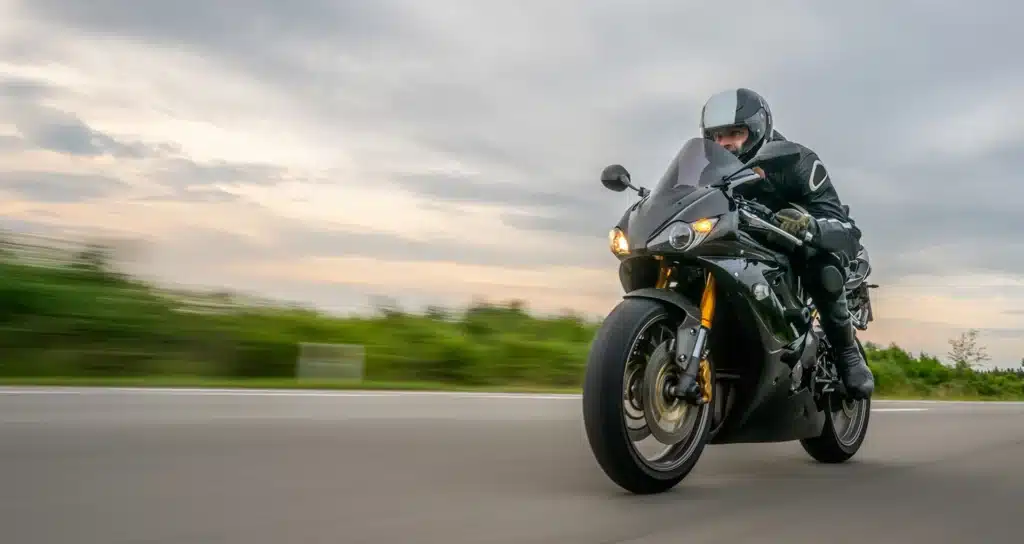
What Illinois riders face
- 144 motorcyclists died on Illinois roads in 2024, down 14.3% from 168 in 2023, with 2,556 motorcyclists injured across 3,361 motorcycle crashes, per the Illinois Department of Transportation's 2024 Illinois Crash Facts & Statistics.
- Motorcycles were involved in just 1.1% of Illinois crashes and a far larger share of fatal crashes.
- Cook County recorded 164,559 total crashes in 2024, more than any other Illinois county, from the county table in the same IDOT report.
- Chicago averages 38.4 inches of snow across a season that normally runs October 31 to April 14, per National Weather Service Chicago climate normals and snow climatology. Riding season is compressed into the months when everyone is being active again after winter, but the pavement is far less welcoming than the weather.
What the helmet numbers actually say
- Illinois has no motorcycle helmet law at any age, one of only three states in that position, per the Insurance Institute for Highway Safety's motorcycle helmet law table, which lists Illinois as "no law."
- 58% of Illinois motorcyclist fatalities were unhelmeted, with 38% helmeted and 4% unknown, per the National Highway Traffic Safety Administration's state traffic data. That is high, and it is short of the near-total figure some pages claim.
- Nationally, 66% of fatally injured motorcycle drivers were helmeted, but in states without a helmet law, only 40% were, from IIHS motorcycle fatality data. Helmet use tracks the law, not rider character.
Taken together, the numbers tell a more nuanced story than many motorcycle safety discussions do. Fatalities fell in 2024, Illinois still has no helmet law, and riders killed in crashes included both helmeted and unhelmeted motorcyclists.
Those facts do not support the story that unhelmeted riding is a fringe choice by careless people. It is the ordinary practice of a state that decided the question decades ago and left it alone.
Nicolet Law Accident & Injury Lawyers represents injured people across Wisconsin, Minnesota, North Dakota, Iowa, Indiana, and Illinois. If a crash in Chicago has put you into a long recovery, a Chicago motorcycle accident lawyer from our firm can reconstruct what happened, take on the insurance side, and pursue a claim that reflects the full impact of your injuries.
Does Illinois Require a Helmet?
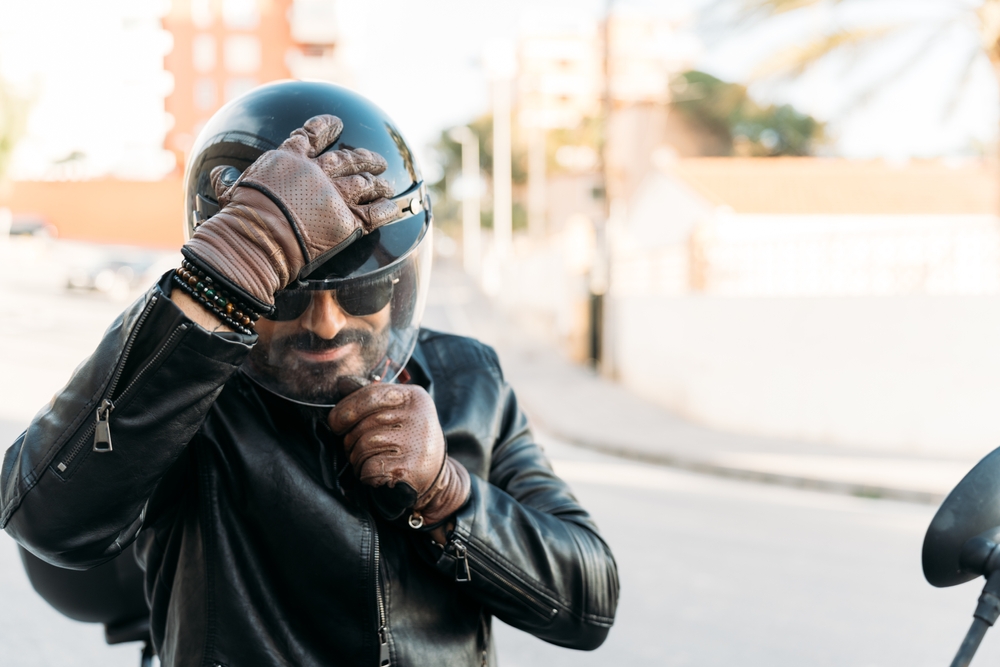
Helmets are not required at any age, and there are no exceptions tied to experience or insurance. Illinois has no helmet provision in its vehicle code at all.
Surrounding states like Michigan, Ohio, and Kentucky have additional rules and prerequisites. Illinois riders have a much shorter list of rules to follow.
Eye protection, however, is required. 625 ILCS 5/11-1404 provides that operators and passengers shall be protected by glasses, goggles, or a transparent shield, and it defines each. One detail catches people out: contact lenses do not satisfy the requirement.
You do need the right license classification. Illinois uses Class M for motorcycles and Class L for motor-driven cycles under 150cc, per the classification standards in the Illinois Administrative Code.
How Will the Insurance Company Try to Reduce My Claim?
There are four common arguments.
"He wasn't wearing a helmet." There is no Illinois statute requiring one, so there is no legal duty to breach. There is also no Illinois statute that expressly addresses whether helmet non-use may reduce damages, which means it is not resolved by a rule and gets litigated instead. Two things matter in that fight: whether the injuries you are claiming have any plausible relationship to headgear, and the fact that Illinois has no duty for the defense to point to. A tibia fracture, a shoulder reconstruction, and degloved skin have nothing to do with a helmet.

For contrast, Illinois does have an express statute about seat belts. 625 ILCS 5/12-603.1 provides that failure to wear a seat belt shall not be considered evidence of negligence, shall not limit an insurer's liability, and shall not diminish any recovery.
"He was speeding." Asserted based on the damage done, usually without further data to back it up. This argument can be answered with skid and scuff measurements, damage geometry, and reconstruction of approach speed.
"He came out of nowhere." This describes a failure to look rather than excusing it. Drivers have a duty to look for and yield to traffic they are crossing, and sight-line analysis from the driver's actual position at the moment they began the turn tends to settle it.
"He was lane splitting." Illinois has no statute using the term and no motorcycle-specific lane-position section. The restriction comes from 625 ILCS 5/11-709, which requires a vehicle to be driven as nearly as practicable entirely within a single lane, and from 625 ILCS 5/11-703, which restricts two-wheeled passing maneuvers. Lane splitting is not authorized in Illinois. It is also not the thing that happened in most crashes where it gets alleged.
Did insurance make you an offer undercut by one of these arguments? Send it over to us before you respond. Call 1-855-NICOLET for a free consultation.
How Does Fault Affect a Motorcycle Accident Claim?

Recovery drops by your percentage of fault and ends once that share passes half. 735 ILCS 5/2-1116 bars a plaintiff whose comparative fault is more than 50%.
That is a cliff rather than a slope. Adjusters will try to find whatever they can to assign blame to riders, increasing that percentage of fault until it reaches 51%. If that happens, the rider can no longer recover anything.
When there are multiple parties involved in a collision, Illinois law is more favorable than in some surrounding states. Under 735 ILCS 5/2-1117, a defendant found 25% or more at fault is jointly and severally liable for all non-medical damages, and every liable defendant is jointly and severally liable for medical expenses regardless of share. In a crash involving a rideshare driver, a commercial vehicle, or a road contractor, that rule frequently determines whether a judgment is collectible.
What Coverage Exists When the At-Fault Driver's Policy Runs Out?
Your own coverage can step in, thanks to UM/UIM coverage.
Illinois sets minimum liability at $25,000 per person, $50,000 per crash, and $20,000 property damage under 625 ILCS 5/7-203. A single orthopedic surgery can exhaust the first figure before rehabilitation is scheduled.

215 ILCS 5/143a requires uninsured motorist coverage on every auto policy issued in Illinois, and the statute expressly covers hit-and-run vehicles. That matters to riders more than to drivers, because a car that runs a bike off the road without contact and keeps going is a scenario this coverage was built for.
Underinsured motorist coverage under 215 ILCS 5/143a-2 is required in an amount matching your uninsured motorist limits where those exceed the state minimum. Note that Illinois UIM is a reducing coverage: your recovery is the UIM limit minus what you already collected from the at-fault policy, not a layer stacked on top.
There is no cap on damages in an ordinary Illinois injury case, which matters here because rider injuries so often carry a permanent component. Future care and lost earning capacity frequently outweigh the bills already received, and those are the categories insurers work hard to compress.
The filing deadline is two years under 735 ILCS 5/13-202, and one year where the City of Chicago, another local public body, or the CTA is part of the claim. If a road defect or a public vehicle contributed to your crash, that shorter clock is the one running. Deadlines have exceptions, and the safest way to protect your claim is to speak with a lawyer as soon as possible.
Injured in Chicago? Get Nicolet.
FAQs About Chicago Motorcycle Accident Lawyers
A car forced me down but never touched me. Do I have a claim?
Often yes. Contact is not what creates liability; causation is. These are usually called no-contact or phantom vehicle crashes, and they rely on evidence gathered fast: witnesses, nearby business or doorbell camera footage, and roadway marks showing your line and braking. If the driver is never identified, Illinois's mandatory uninsured motorist coverage may respond.
I went down on a steel plate or a pothole downtown. Who is responsible?
Possibly a contractor, possibly a utility, and possibly the City of Chicago, which changes the timeline sharply. A claim against a local public body must be commenced within one year under 745 ILCS 10/8-101, not two. Photograph the surface and the location if you can, and call within weeks rather than months.
Should I let the insurer take my bike for inspection?
Not before it has been documented on your behalf. The motorcycle is evidence, and damage patterns help establish impact angle, closing speed, and whether you were upright or already sliding. Photograph everything from multiple angles, keep your gear, including the helmet if you wore one, and let us arrange an independent inspection first.
Does Illinois law say anything about riders sharing a lane?
Not in the way riders often assume. There is no Illinois statute authorizing lane splitting or lane filtering, and no motorcycle-specific lane-position section either. The general single-lane rule and the restriction on two-wheeled passing maneuvers are what govern. Anyone citing a specific Illinois "lane splitting statute" is citing something that does not exist.
The insurance company already made an offer. Does that mean the case is simple?
Usually the opposite. A fast offer in a rider file is normally built on a fault percentage assigned before any reconstruction and before the medical picture is complete, often on one of the four arguments listed earlier. Have a Chicago motorcycle accident lawyer at Nicolet Law read it before you respond. The consultation is free.
Legal Resources About Illinois Motorcycle Accident Claims
Have more questions about motorcycle accident claims? Below are attorney-curated resources that go over commonly asked questions and important topics. The linked articles provide background information, but are not a substitute for personalized advice that you can get from a one-on-one conversation with an attorney.
- I Got in a Motorcycle Accident. What Do I Do?
- Why Should I Hire a Motorcycle Accident Lawyer?
- What to Do After a Motorcycle Accident: Step-by-Step Guide for Riders in the Midwest
Riding without a helmet is legal in Illinois, and an adjuster treating it as a character flaw is making an argument, rather than stating a rule. Consultations are free, and you do not pay attorney's fees unless we recover money for you. Reach a Chicago motorcycle accident lawyer at 1-855-NICOLET or use our online contact form.