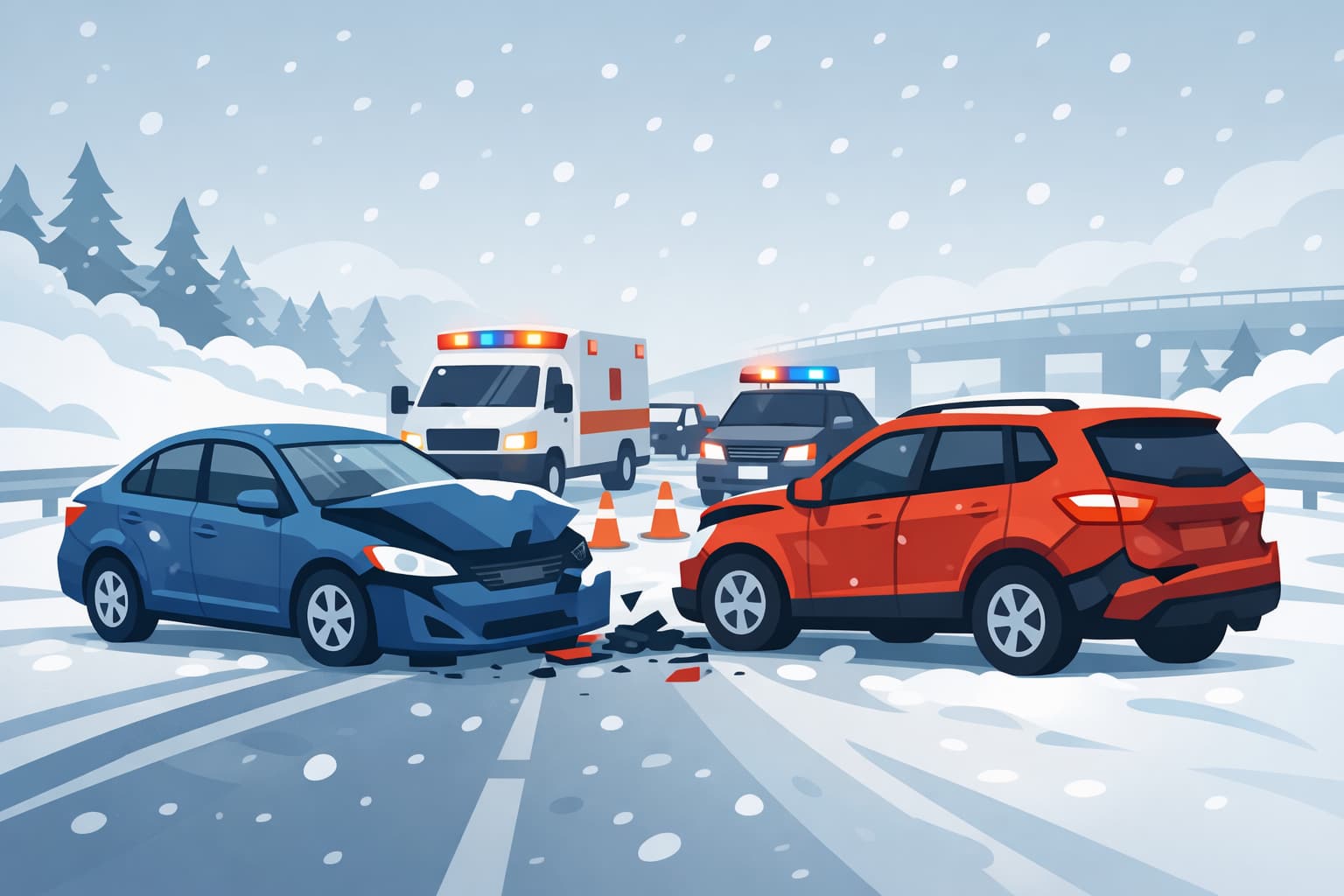
- Key Takeaways About Why Legal Representation Matters When Demonstrating Winter Driving Accident Liability
- Wisconsin Winter Driving Accident Statistics
- Determining Fault When Weather is a Factor
- Common Causes of Winter Driving Accidents and How They Affect Liability in Motor Vehicle Accident Cases
- Common Winter Car Crash Scenarios and the Complexities of Determining Liability
- The Role of a Lawyer In Wisconsin Winter Driving Accidents
- Wisconsin Winter Driving Accident Liability FAQs
- Understand Your Legal Options After a Winter Car Crash With the Help of Nicolet Accident & Injury Lawyers
In winter driving accidents in Wisconsin, fault is determined by proving which driver failed to operate their vehicle with reasonable care for the conditions, as bad weather alone does not excuse negligence.
After a crash on a snowy or icy road, you shouldn't automatically assume the weather was the only cause. Legal support may demonstrate that another driver's failure to adapt to road conditions might be the real reason for your injuries.
A car accident attorney in Wisconsin can help analyze crash details, establish who is responsible, and protect your rights.
Understanding how Wisconsin law applies to these crashes with the help of Nicolet Law Accident & Injury Lawyers can be a key first step toward securing the resources you need for recovery.
Unsure how winter car accident liability affects your eligibility to recover compensation? Schedule a free case evaluation with an experienced personal injury law firm in Wisconsin to explore your rights and legal options.
Injured? Get Nicolet.
Key Takeaways About Why Legal Representation Matters When Demonstrating Winter Driving Accident Liability
- Understanding duty of care in winter: Drivers are legally required to adjust their behavior to match winter conditions. Car accident attorneys can use failure to take legally required precautions as evidence of the other driver's liability.
- Applying Wisconsin's "reasonable speed" law: Under Wisconsin Statute § 346.57(2), driving at the posted speed limit on icy or snowy roads may still be deemed unsafe. Legal representation can highlight how a driver’s failure to adapt to hazardous conditions violated this law, strengthening your case.
- Navigating the 51 percent bar rule: Wisconsin’s comparative negligence law may still allow you to recover damages if you are 50% or less at fault. An attorney can help counter attempts by insurers to unfairly assign blame and protect your ability to seek compensation after a winter driving accident.
- Addressing black ice crashes: Black ice is a common winter hazard, but it doesn’t absolve drivers of responsibility. Drivers are expected to anticipate freezing conditions and adjust accordingly. A lawyer can help demonstrate how negligence, not just the ice, contributed to the crash.
- Preserving critical evidence: Evidence like tire tracks, photos of the scene, and police reports can quickly disappear after a winter accident. Legal professionals act swiftly to secure and analyze this evidence, ensuring it supports your claim effectively.
Wisconsin Winter Driving Accident Statistics
Winter driving conditions pose serious risks to drivers, often leading to preventable crashes and injuries. Data from the Federal Highway Administration and the State of Wisconsin Department of Transportation (DOT) highlight the dangers associated with snowy and icy roads:
- National impact: Each year, 24 percent of weather-related vehicle crashes occur on snowy, slushy, or icy pavement, and 15 percent happen during active snowfall or sleet. These conditions result in over 1,300 deaths and more than 116,800 injuries annually.
- Wisconsin-specific data: From October 2023 to May 2024, winter weather contributed to over 11,000 reported crashes in Wisconsin, causing nine fatalities and injuring more than 2,000 people.
- Extensive roadways: Wisconsin maintains over 115,000 miles of road, making it one of the most challenging states to manage during harsh winter months.
These numbers underscore that winter crashes are often more than just accidents caused by bad weather. They frequently involve a driver’s failure to adapt to hazardous conditions, such as driving too fast for the road or ignoring visibility issues.
When negligence is involved, it can create a basis for pursuing compensation through a personal injury lawsuit. Legal representation can help uncover the facts and hold the responsible parties accountable.
Determining Fault When Weather is a Factor
Many people assume that if a crash happens during a snowstorm or on an icy road, no one is truly at fault.
However, the law sees it differently.
All drivers have a responsibility to adjust their driving to match the weather conditions. This is known as the "duty of care."
A driver who slides through a stop sign on ice and causes a collision may be held liable because they failed to slow down enough for the slippery conditions. The weather provides context, but it does not absolve a driver of responsibility.
Proving negligence in hazardous weather involves showing that a reasonably careful person would have driven differently to avoid the crash.
Wisconsin's Comparative Negligence Law
When assigning fault in multi-vehicle accidents or any crash, Wisconsin uses a system called "modified comparative negligence." Within that system, Wisconsin law sets up a rule known commonly as the 51 percent bar rule.
Here’s how it works:
- You can still recover some damages if found to be partially at fault for the accident, as long as your share of the fault is 50% or less.
- You may not be able to recover damages if you are found to be 51% or more at fault for the accident.
So if someone is found to be 10% at fault for their accident, they can at most receive 90% of the available compensation. Insurance companies often use bad weather as an opportunity to shift blame and argue that the injured person was also at fault.
This is a common insurance defense for a winter crash, and it is a key reason why having legal guidance is so beneficial.
A car accident attorney can challenge unfair blame and protect your ability to seek injury compensation after a winter accident.
Common Causes of Winter Driving Accidents and How They Affect Liability in Motor Vehicle Accident Cases
Winter driving accidents often stem from driver negligence rather than just poor weather conditions. Each of these causes can create liability issues that a lawyer can investigate to build a strong case:
- Driving too fast for conditions: Speeding on icy or snowy roads is a clear violation of Wisconsin’s “reasonable speed” law. A lawyer can use evidence such as skid marks, weather reports, and witness statements to demonstrate that the other driver failed to adjust their speed, thereby causing the crash.
- Following too closely: Tailgating on slippery roads leaves no margin for error, often leading to rear-end collisions. Legal representation can demonstrate how the at-fault driver’s failure to maintain a safe following distance directly caused the accident.
- Improper braking or turning: Sudden or aggressive maneuvers can cause a vehicle to lose control. An attorney may work with accident reconstruction experts to prove that the other driver’s actions were reckless under the conditions.
- Poor vehicle maintenance: Worn tires or faulty brakes can make it impossible to navigate winter roads safely. A lawyer can assess maintenance records to demonstrate that the at-fault driver failed to fulfill their responsibility to maintain their vehicle in a safe operating condition.
- Driving during severe weather: Drivers are expected to take extra precautions when road or weather conditions are hazardous. Legal counsel can show how exercising caution, or failing to do so, during severe weather affects fault and strengthens your case.
Establishing liability in winter accidents often requires more than just a police report. A lawyer can conduct an independent case analysis, gathering critical evidence like road conditions, vehicle damage, and driver behavior to uncover the truth and help injured parties pursue fair compensation.
Injured? Get Nicolet.
Common Winter Car Crash Scenarios and the Complexities of Determining Liability
Winter driving in Wisconsin, particularly in high-traffic areas such as Milwaukee, often gives rise to unique crash scenarios that necessitate careful legal analysis.
These incidents highlight the challenges of determining liability in hazardous conditions:
- Pileups on major highways: Snowstorms and icy conditions on highways like I-94 and I-43 frequently result in multi-vehicle accidents. Determining fault in these chain-reaction crashes involves analyzing which driver’s actions initiated the collision and whether others failed to react appropriately.
- Collisions with snowplows or municipal vehicles: Accidents involving snowplows or salt trucks can raise questions about government liability or the operator’s negligence. Legal professionals can navigate these complex claims, working to hold all responsible parties accountable.
- Crashes involving commercial trucks: Semi-trucks and delivery vehicles face heightened risks on icy roads, particularly along Wisconsin’s major trucking routes. Liability may extend beyond the driver to include the trucking company if poor maintenance or unsafe scheduling was a factor.
- Intersection accidents in urban areas: Slippery intersections in cities like Milwaukee often lead to rear-end collisions or side-impact crashes. A lawyer can investigate whether a driver’s failure to yield or stop safely caused the accident.
- Single-vehicle accidents caused by road hazards: Black ice or unplowed roads can lead to single-vehicle crashes. However, liability may still exist if another driver’s negligence forced the vehicle off the road or if a municipality failed to address known hazards.
Each of these scenarios presents unique legal challenges, from identifying liable parties to preserving evidence like vehicle data and road conditions.
A car accident attorney can provide the legal knowledge needed to untangle these complexities, helping injured individuals pursue the compensation they deserve.
The Role of a Lawyer In Wisconsin Winter Driving Accidents
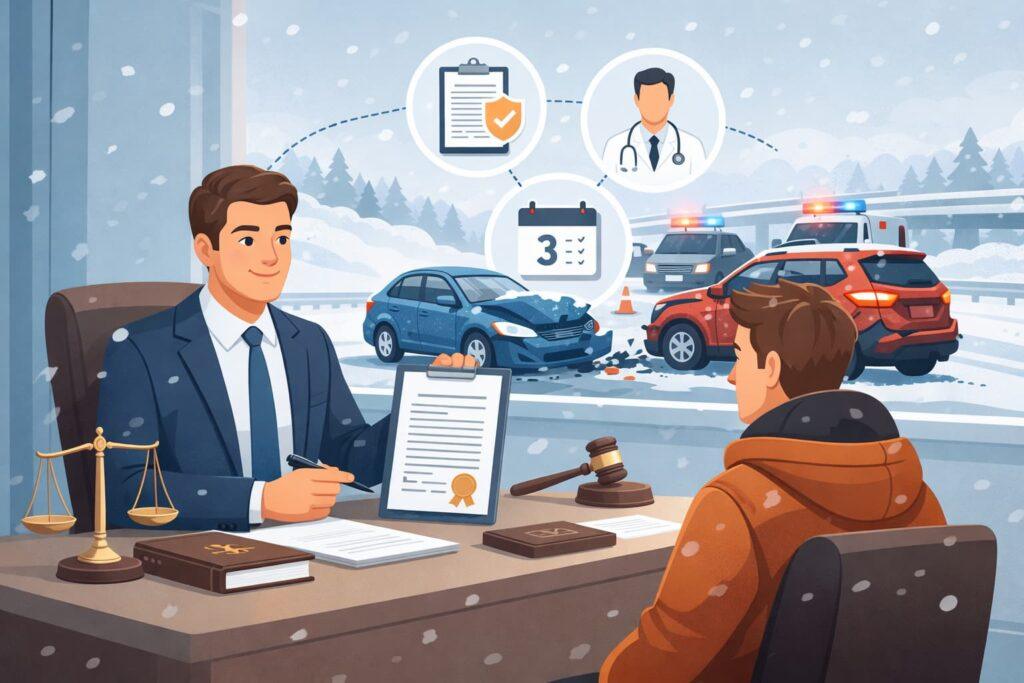
Even when liability is clear, securing fair compensation after a winter driving accident in Wisconsin can be an uphill battle.
Insurance companies often use tactics to minimize payouts, leaving injured individuals struggling to cover medical bills and other expenses.
This is where guidance from Nicolet Law Accident & Injury Lawyers can be invaluable in assisting with:
- Challenging insurance company arguments: Insurance companies may say the weather caused the crash, and no one is to blame. But even in bad conditions, drivers must still act carefully. An experienced lawyer can demonstrate that the other driver failed to take proper care of the weather and that their actions, not just the conditions, contributed to the crash.
- Connecting clients with medical professionals: Winter accidents can often involve drivers losing control of their speed and direction, resulting in costly treatments. This can vary from surgeries to long-term rehabilitation. Legal professionals can help connect clients with medical providers who are willing to delay payment until a settlement is reached.
- Navigating complex filing deadlines: Wisconsin’s statute of limitations for personal injury claims is three years, but certain factors, such as claims involving government entities, may shorten this timeline. A lawyer can ensure all deadlines are met, protecting your right to pursue compensation.
- Maximizing compensation for long-term impacts: Injuries from winter crashes can result in ongoing medical needs, lost wages, and a reduced quality of life. Legal representation helps ensure that these long-term costs are factored into your claim, preventing insufficient settlements.
- Addressing Wisconsin-specific winter regulations: From the state’s “reasonable speed” law to municipal responsibilities for road maintenance, a lawyer can identify how local regulations apply to your case and use them to strengthen your claim.
Without legal representation, injured individuals may face insufficient compensation or miss critical opportunities to recover damages.
A lawyer’s role extends beyond proving liability. They advocate for your full recovery, working to ensure you have the resources needed to move forward after a winter driving accident.
Wisconsin Winter Driving Accident Liability FAQs
What if multiple cars were involved in the pileup?
Multi-party accident liability can be very complicated. Assigning fault may involve a detailed reconstruction of the accident to determine which driver's initial negligence caused the chain reaction. A law firm with experience in these cases can help untangle the facts and identify all responsible parties.
Does my car insurance automatically cover weather-related accidents?
Your collision coverage may pay for property damage to your car, regardless of fault, but it will not cover your medical bills or other losses. To recover damages for your injuries, you typically need to file a claim against the at-fault driver's liability insurance. Legal counsel can help navigate these insurance claims.
Understand Your Legal Options After a Winter Car Crash With the Help of Nicolet Accident & Injury Lawyers
Determining car accident liability after a crash on icy or snowy roads requires a careful look at the facts. It is about more than just the weather; it is about driver responsibility.
When a driver's carelessness leads to a collision, they can be held accountable for the harm they cause. Understanding your rights under Wisconsin's personal injury law is the first step toward getting the resources you need to recover.
Are you facing questions about fault after a winter driving accident? Explore your legal options with Nicolet Accident & Injury Lawyers.
Schedule a free case evaluation with our award-winning Wisconsin personal injury lawyers online or at 1-855-NICOLET for legal support after a winter auto collision in Hudson, Eau Claire, Green Bay, La Crosse, Madison, Milwaukee, New Richmond, Rice Lake, River Falls, Superior, and Wausau.