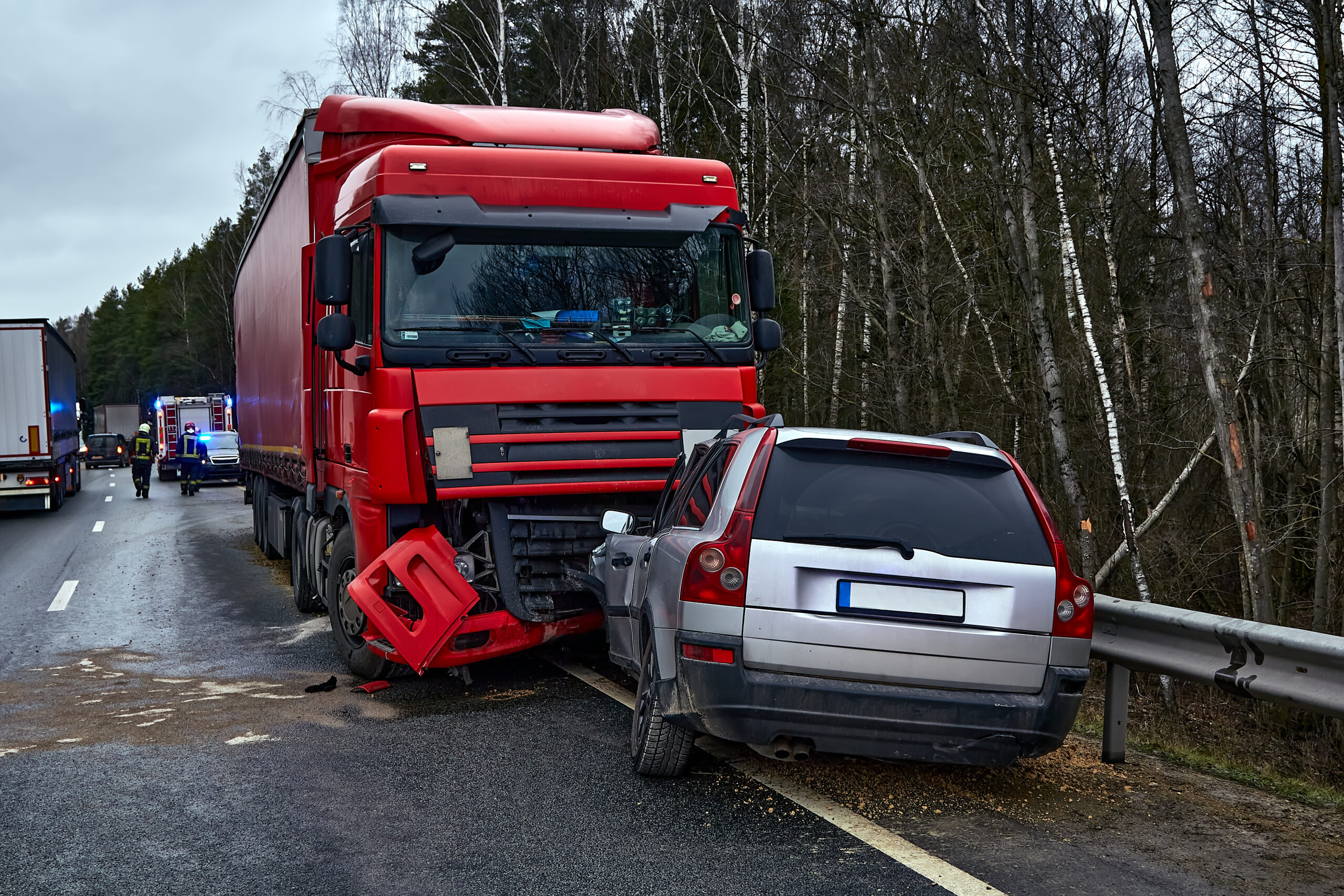
- Key Takeaways for What Compensation Am I Entitled to for Truck Accident Injuries
- Understanding the Types of Compensation Available After a Truck Accident
- Truck Accident Injuries: What Compensation Am I Entitled To? Statistics
- How State Laws Impact Your Truck Accident Claim
- Proving Negligence: The Key to Your Compensation
- Critical Deadlines: The Statute of Limitations
- FAQs: Truck Accident Injuries: What Compensation Am I Entitled To?
- Injured? Get Help Navigating Your Claim
If you have been injured in an accident with a large commercial truck, you may be entitled to compensation for your medical bills, lost income, and the significant pain and suffering you have endured. The process for securing this compensation can be complicated, but understanding your rights is key to getting full and fair compensation for all the damages you suffered. A skilled Milwaukee truck accident lawyer can help you navigate the legal process, protect your rights, and pursue the maximum recovery available under Wisconsin law.
Key Takeaways for What Compensation Am I Entitled to for Truck Accident Injuries
- Individuals injured in a truck accident may be able to recover compensation for both economic losses, such as medical bills and lost wages, and non-economic losses, like pain and suffering.
- The laws of the state where the accident occurred—such as Wisconsin, Minnesota, North Dakota, or Iowa—will significantly impact the claim process, including rules on fault and deadlines for filing.
- Proving that the truck driver or trucking company was negligent is fundamental to a successful personal injury claim.
- Evidence from the crash, including the truck's "black box" data and driver logbooks, is often critical in establishing fault.
- Truck accident claims are complex due to federal regulations, multiple potentially liable parties, and aggressive insurance company tactics.
Understanding the Types of Compensation Available After a Truck Accident
After a collision with a semi-truck, the financial, physical, and emotional costs can be staggering. The legal system allows injury victims to seek compensation, often called "damages," which are typically broken down into three main categories.
Economic Damages: The Tangible Financial Losses

These are the most straightforward types of compensation because they cover the specific, calculable financial losses you have incurred due to the accident. Keeping detailed records of these expenses is vital for building your case.
- Medical Expenses: This includes all costs related to your injuries, from the initial ambulance ride and emergency room visit to ongoing physical therapy, future surgeries, prescription medications, and necessary medical equipment.
- Lost Wages and Loss of Earning Capacity: If your injuries prevent you from working, you can seek compensation for the income you have already lost. If the injuries are permanent and will affect your ability to earn a living in the future, you may also be compensated for this loss of future earning potential.
- Property Damage: This covers the cost to repair or replace your vehicle and any other personal property that was damaged in the crash.
- Other Out-of-Pocket Costs: You may have other expenses, such as the cost of traveling to medical appointments or hiring help for household chores you can no longer perform.
These calculable losses form the foundation of a personal injury claim and are often the easiest to prove with receipts, bills, and pay stubs.
Non-Economic Damages: The Intangible Costs of Your Injuries
While they don't come with a price tag, the non-financial impacts of a serious truck accident are often the most devastating. Non-economic damages are meant to compensate you for these profound personal losses.
- Pain and Suffering: This compensates for the physical pain, discomfort, and emotional distress you experience from your injuries.
- Mental Anguish: This can include conditions like anxiety, depression, insomnia, or post-traumatic stress disorder (PTSD) that develop as a result of the traumatic event.
- Loss of Enjoyment of Life: If your injuries prevent you from participating in hobbies, activities, or life experiences you once loved, you can be compensated for this loss.
- Loss of Consortium: In some cases, the uninjured spouse of a victim may file a claim for the loss of companionship, affection, and intimacy resulting from their partner's injuries.
Because these damages are subjective, they are often more difficult to calculate, but they are a crucial part of making sure you are compensated for the full impact the accident has had on your life.
Punitive Damages: Holding Gross Negligence Accountable
In rare cases where the defendant's conduct was particularly reckless or malicious, a court may award punitive damages. These are not meant to compensate the victim for a loss but rather to punish the wrongdoer and deter similar behavior in the future. For example, if a trucking company knowingly forced its drivers to violate safety regulations, punitive damages might be considered.
Truck Accident Injuries: What Compensation Am I Entitled To? Statistics
The reality is that collisions involving large commercial trucks are disproportionately severe for the occupants of smaller passenger vehicles. The sheer size and weight difference—a fully loaded semi-truck can weigh up to 80,000 pounds compared to an average car's 4,000 pounds—means the consequences are often catastrophic.
According to the nonprofit Insurance Institute for Highway Safety (IIHS), in the most recent year of data, 4,354 people were killed in crashes involving large trucks, a 38% increase from 2009, when it was the lowest it has been since the collection of fatal crash data began in 1975. Of the fatal crashes involving large trucks, the vast majority of fatalities (65%) are occupants of the other vehicles.
These statistics underscore the vulnerability of drivers on major corridors like the I-94, which serves as a critical trucking artery from Tomah, Wisconsin, through Eau Claire and into the Twin Cities suburbs like Woodbury. The same is true for I-35, another major route for commercial traffic through Minnesota and Iowa.
For the thousands of commuters who use these highways daily, the risk of a devastating encounter is ever-present. Many of these crashes are preventable and can be traced back to driver fatigue, distraction, or company negligence, making the roads we all share less safe.
How State Laws Impact Your Truck Accident Claim
The location of the accident is one of the most important factors in a personal injury claim. The laws in Wisconsin, Minnesota, North Dakota, and Iowa each have unique rules that can dramatically affect your ability to recover compensation.
Fault vs. No-Fault Systems: The Minnesota Difference
Most states, including Wisconsin and Iowa, are "at-fault" states. This means the person who caused the accident is responsible for paying for the damages. In contrast, Minnesota uses a "no-fault" system for motor vehicle accidents.
Under Minnesota's no-fault law, your own insurance policy includes Personal Injury Protection (PIP) coverage. This coverage pays for your initial medical bills and lost wages up to your policy limit, regardless of who was at fault for the crash. However, this does not mean you can never sue the at-fault truck driver. You can step outside the no-fault system and pursue a claim against the negligent driver if your medical bills exceed $4,000 or if the injury results in:
- Permanent disfigurement
- Permanent injury
- Disability for 60 days or more
- Death
This threshold allows those with serious injuries to seek full compensation, including for pain and suffering, which PIP does not cover.
The Rule of Comparative Negligence in the Midwest
What happens if you are found to be partially at fault for the accident? All four states—Wisconsin, Minnesota, North Dakota, and Iowa—use a system called "modified comparative negligence." This rule means you can still recover damages as long as your share of the blame is not equal to or greater than the other party's.
- In Wisconsin, Minnesota, and Iowa, you can recover damages as long as you are found to be 50% or less at fault. This is known as the 51% bar rule. Your compensation will be reduced by your percentage of fault. For example, if you are awarded $100,000 but found to be 20% at fault, your award would be reduced to $80,000.
- In North Dakota, the rule is slightly stricter. You can only recover damages if your fault is less than the combined fault of the other parties (the 50% bar rule). If you are found to be 50% or more at fault, you cannot recover any compensation.
This principle makes it crucial to counter any attempts by the trucking company's insurance to unfairly shift blame onto you.
Proving Negligence: The Key to Your Compensation
To receive compensation in a truck accident case, you and your legal team must prove that the truck driver, the trucking company, or another party was negligent. Legally, negligence means that someone failed to act with reasonable care, and this failure caused your injuries.
Common Causes of Truck Driver and Trucking Company Negligence
Truck accidents are rarely simple. They are often the result of a chain of bad decisions or systemic failures. Investigating these causes is key to holding the right parties accountable.
- Driver Fatigue and Hours-of-Service Violations: Federal laws strictly limit the number of hours a trucker can drive without resting. Facing pressure from their employer, some drivers keep dual logbooks—one fake log to show law enforcement and a real one for their company. This dangerous practice puts everyone on the road at risk.
- Distracted or Impaired Driving: Using a cell phone, adjusting a GPS, or eating while driving a massive truck can lead to tragedy in an instant. Likewise, driving under the influence of alcohol or other substances is a catastrophic breach of duty.
- Improper Truck Maintenance: Trucking companies are responsible for keeping their fleets in safe working order. Worn brakes, bad tires, and broken lights can all lead to deadly accidents on rural roads and major highways alike.
- Inadequate Driver Training: Companies that fail to properly train their drivers or hire individuals with a history of unsafe driving can be held liable for negligent hiring practices.
- Overloaded or Improperly Secured Cargo: Cargo that is too heavy or shifts during transit can cause a driver to lose control of the vehicle, leading to jackknife or rollover accidents.
Identifying these failures is essential for holding reckless truckers and their employers accountable and making our local roads and highways safer for everyone.
Critical Deadlines: The Statute of Limitations
A statute of limitations is a law that sets the maximum amount of time you have to initiate legal proceedings. These deadlines are absolute, so it's critical to be aware of the time limit in your state.
- In Wisconsin, you generally have three years from the date of the accident to file a lawsuit, as established by Wisconsin Statutes § 893.54.
- In Minnesota, the statute of limitations is typically six years from the date of the accident under Minnesota Statutes § 541.05. However, certain claims, like those involving underinsured motorist coverage, may have shorter deadlines.
- In North Dakota, you also generally have six years to file a claim.
- In Iowa, the deadline is much shorter. You typically have only two years from the date of the injury to file a lawsuit, according to the Code of Iowa § 614.1.
Because evidence can disappear and memories can fade, it is always best to act long before these deadlines approach.
FAQs: Truck Accident Injuries: What Compensation Am I Entitled To?
Here are answers to some common questions that arise after a serious truck accident.
How is the value of my pain and suffering calculated?
There is no exact formula for calculating pain and suffering. Insurance companies often use methods like the multiplier method, where economic damages are multiplied by a number (typically between 1.5 and 5) based on the severity of the injuries. The final amount is determined through negotiation or by a jury at trial.
What happens if I were a passenger in either the truck or the car that was hit?
As a passenger, you have the same rights to seek compensation for your injuries as a driver. You can typically file a claim against the insurance policy of any driver who was at fault for the accident, whether it was the driver of the truck, the car you were in, or both.
Injured? Get Help Navigating Your Claim

When your life is turned upside down by a truck accident, the last thing you should have to do is fight with a massive insurance company on your own. At Nicolet Law Accident & Injury Lawyers, we want to take that burden off your shoulders. We are from the Midwest, born and raised, and we are dedicated to serving the communities we call home, from Green Bay to Duluth and down to Des Moines. We understand the challenges you are facing and are here to help you navigate the complicated legal process.
Our experienced Milwaukee personal injury lawyer team handles the insurance companies, gathers the evidence, and builds a strong case for you, so you can focus on healing. Our promise is simple: We don't get paid unless we win for you. Your initial case review is always free and comes with no obligation. If you or a loved one has been injured, let us be your advocates. Contact Nicolet Law Accident & Injury Lawyers today at 1-855-NICOLET or through our online form and let us fight for the compensation and justice you deserve.