- Key Takeaways About Why Legal Representation Matters in Winter Slip and Fall Accident Claims
- Winter Slip and Fall Accident Statistics
- Understanding Property Owner Responsibility for Snow and Ice
- Navigating Comparative Negligence Laws in the Midwest
- Deadlines for Filing a Winter Slip and Fall Injury Claim
- What Injuries Qualify For Compensation After a Wintertime Slip and Fall Accident?
- Slip and Fall Accidents in Winter FAQs
- Your Legal Path to Recovery After a Winter Fall Starts With Nicolet Law Accident & Injury Lawyers
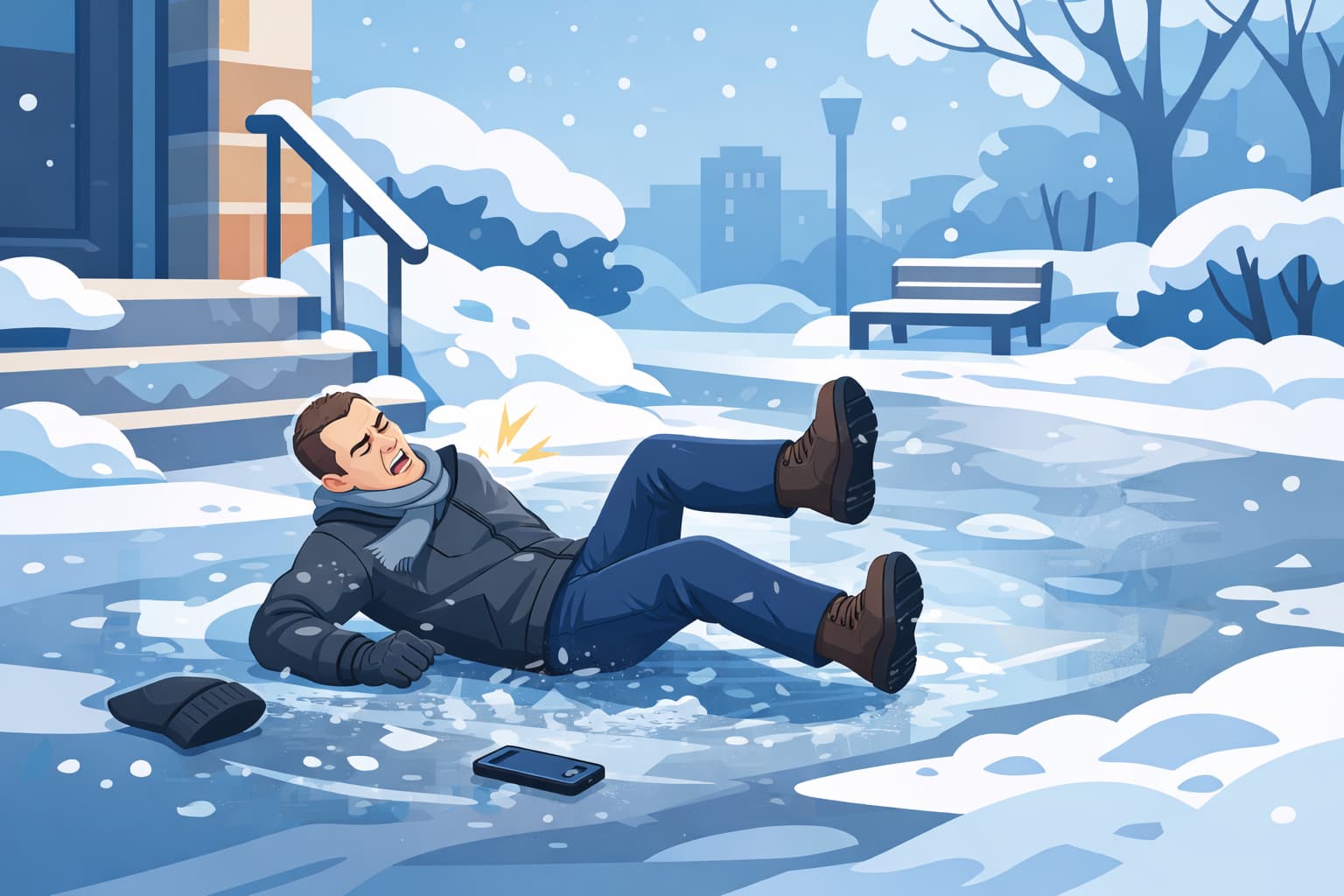
If a property owner’s negligence, such as failing to clear snow or salt icy walkways, leads to your injury, you may have legal options to pursue compensation after slip and fall accidents in winter.
A slip and fall is never a pleasant experience, but when snow or ice is involved, the consequences can be even more severe.
Many people assume that falling on icy sidewalks or snowy parking lots is just an unfortunate risk that comes with winter, something they have to accept and move on from.
However, that’s not always the case.
In Midwest states such as Wisconsin, Minnesota, North Dakota, and Iowa, property owners have a legal obligation to address hazardous winter conditions on their premises.
These claims can be complex, often requiring the insight of a premises liability attorney to navigate the challenges of proving fault and dealing with insurance companies.
Understanding your rights with the help of Nicolet Law Accident & Injury Lawyers can be a crucial step toward holding negligent property owners accountable and securing the resources you need to recover.
Explore your legal options during a free case evaluation with an experienced snow and ice slip and fall accident lawyer by calling 1-855-NICOLET or completing a brief online contact form.
Injured? Get Nicolet.
Key Takeaways About Why Legal Representation Matters in Winter Slip and Fall Accident Claims
- Property owners have a duty to address hazards: A lawyer can help hold property owners accountable when they fail to take reasonable steps to clear snow and ice, creating unsafe conditions.
- Proving negligence requires legal knowledge: Demonstrating that a property owner ignored or failed to address hazards, such as black ice, often involves gathering evidence and building a strong case. A lawyer can take on the legal heavy-lifting in this process, allowing you to focus on your recovery.
- Comparative negligence can complicate claims: Insurance companies may try to shift blame onto you. Legal representation can ensure your side of the story is heard and prevent your compensation from being reduced.
- Filing deadlines are crucial to keep track of: Missing the statute of limitations can end your case before it begins. A lawyer ensures your claim is filed on time, no matter the state’s deadline.
- Evidence disappears fast in winter conditions: Snow and ice melt quickly, but a lawyer can act immediately to preserve critical evidence and strengthen your claim.
Winter Slip and Fall Accident Statistics
Truveta's research and clinical data platform highlights multiple studies and national datasets that reveal the widespread risks and injury patterns associated with winter slips and falls:
- There were 13.1 emergency department visits for falls on snow or ice per 10,000 emergency department visits during wintery months.
- States in "freezing winter regions" saw a rate of falls on snow and ice three times higher than those with milder winters.
- Among people seen for falls on snow or ice, wrist fractures were the most common associated injury, followed by ankle dislocations/sprains and ankle fractures.
- Patients over the age of 65 accounted for 23% of the population with falls on snow or ice, while 34.3% were between 45 and 64 years old.
- More than 1 in 5 of these winter falls resulted in a strain, sprain, fracture, or dislocation.
- Higher rates of wrist fractures were observed in both the oldest (aged 65 and above) and youngest (under 18) populations.
- Most falls and related injuries occurred during the morning on days with high precipitation, particularly before snow or ice removal took place.
Winter falls in Wisconsin, Iowa, Minnesota, and North Dakota don't just risk high medical costs that may exceed tens of thousands or even millions over a lifetime.
They can mean months of lost wages, lasting pain and suffering, loss of mobility or independence, and a major disruption to your daily life, all because of conditions that often could have been prevented.
When someone else's negligence causes you to slip and fall during the winter, legal action may be the only way to recover full compensation and protect your future.
Understanding Property Owner Responsibility for Snow and Ice
Property owners have a legal obligation to maintain their premises in a reasonably safe condition, including addressing hazards caused by snow and ice.
This responsibility, known as premises liability, requires owners to take reasonable steps to clear walkways, parking lots, and entrances within a reasonable time after a storm has ended.
Determining what is “reasonable” can be a complex process. Property owners are not required to keep surfaces completely free of ice and snow at all times, and proving negligence in these cases often requires a detailed understanding of the law.
A lawyer can help establish whether the property owner failed to meet their duty of care by examining key elements such as:
- Duty of care: Did the property owner have a legal obligation to maintain safe conditions?
- Breach of duty: Did they fail to take reasonable actions, such as salting or shoveling, to address the hazard?
- Causation: Did their failure directly lead to your fall and injuries?
- Damages: Did the fall result in medical bills, lost income, or other financial and physical harm?
For example, if a store owner neglects to salt an obviously icy entrance hours after a freeze, they may be liable for injuries caused by a fall.
However, proving fault in these and other similar types of cases requires more than just pointing to the ice. It involves gathering evidence, understanding local laws, and building a strong case.
Legal professionals can navigate these complexities and help hold property owners accountable for their negligence. By working with a lawyer, you can focus on your recovery while they handle the legal details needed to pursue fair compensation.
Navigating Comparative Negligence Laws in the Midwest
One of the first arguments an insurance company may make in a winter slip and fall case is that you were also careless.
This legal doctrine, known as comparative negligence, is recognized in Minnesota, Wisconsin, North Dakota, and Iowa.
How it works varies slightly by state:
- Minnesota: Under Minnesota Statute § 604.01, you may be able to recover compensation as long as your share of fault is 50 percent or less. Any damages awarded will be adjusted based on your percentage of responsibility.
- Wisconsin: Under Wisconsin Statute § 895.045 may allow you to seek compensation if your fault is less than 51 percent. The amount you recover may be tied to your level of fault.
- North Dakota: According to North Dakota Century Code § 32-03.2-02, you can pursue damages if your fault is less than 50%. Your compensation will be adjusted proportionally to your share of responsibility as long as you don’t exceed the fault threshold.
- Iowa: As per Iowa Code § 668.3, accident survivors may be able to pursue compensation if your fault is 50 percent or less. The damages you receive will be reduced by the percentage of fault assigned to you.
An insurance adjuster might argue you were not wearing proper footwear or were not paying attention. A slip and fall attorney can push back against these claims and work to demonstrate that the property owner holds the primary responsibility for the dangerous condition.
Injured? Get Nicolet.
Deadlines for Filing a Winter Slip and Fall Injury Claim
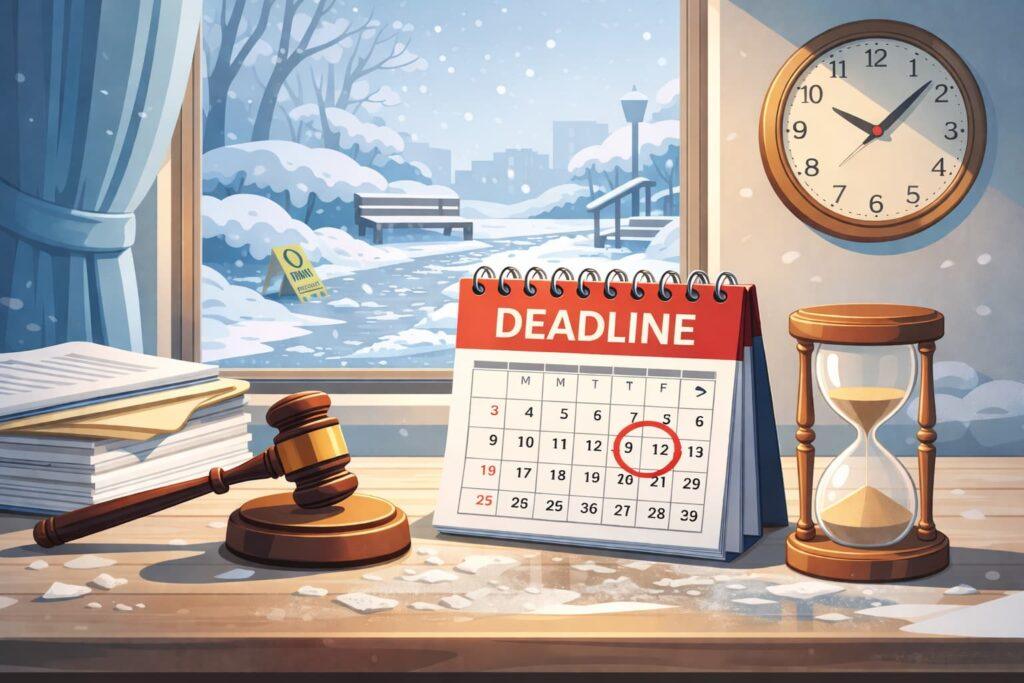
Every state sets a legal time limit for filing a personal injury lawsuit, known as the statute of limitations. If you miss this deadline, you may lose your right to seek compensation forever. These deadlines are strict and vary across the Midwest:
- Minnesota: You generally have six years from the date of the fall to file a lawsuit.
- North Dakota: The statute of limitations is also six years.
- Wisconsin: The deadline is shorter, giving you three years to file a claim.
- Iowa: The time limit is typically two years from the date of the injury.
These timelines can have exceptions, especially in cases where a minor was injured, the accident resulted in death, or a government entity is involved.
Early legal action may be the most effective way to preserve your right to pursue compensation that supports recovery after a slip and fall accident on snow or ice.
What Injuries Qualify For Compensation After a Wintertime Slip and Fall Accident?
Whether an injury is immediately apparent or develops over time, compensation may be available if it results in calculable damages, also known as “economic damages.”
These damages can include medical expenses, lost wages, and other financial or physical consequences resulting from the injury.
Common injuries that may qualify for compensation include:
- Fractures and broken bones: Falls on icy surfaces often lead to fractures, particularly in the wrists, hips, and ankles. These injuries can require extensive medical treatment and rehabilitation.
- Traumatic brain injuries (TBI): A hard fall on ice can result in a concussion or more severe brain injuries, which may cause long-term cognitive or physical impairments.
- Spinal cord injuries: Slipping on snow or ice can lead to serious back or neck injuries, including herniated discs or even paralysis in extreme cases.
- Soft tissue injuries: Sprains, strains, and torn ligaments are common in slip and fall accidents and can limit mobility or require physical therapy.
- Internal injuries: Falls can cause internal bleeding or organ damage, which may not be immediately noticeable but can have serious consequences.
Economic damages aren’t the only kind of damages you can pursue in a personal injury lawsuit. Non-economic damages may also be available, such as:
- Pain and suffering: Compensation for the physical pain caused by your injuries.
- Emotional distress: Damages for anxiety, depression, or trauma resulting from the accident.
- Loss of enjoyment of life: Compensation for the inability to participate in activities you once enjoyed.
- Loss of consortium: Damages for the impact your injuries have on your relationships with loved ones.
As you can see, these damages don’t usually come with an invoice or a receipt. It doesn’t matter if an injury is major or minor, it can have lasting effects on your physical, emotional, and financial well-being.
Speaking with a lawyer can help you understand the full scope of damages you may be entitled to and how to take the next steps toward recovery.
Slip and Fall Accidents in Winter FAQs
What if I fell on a public sidewalk?
Liability for an injury on a public sidewalk can be complicated. In some cities, the adjacent property owner is responsible for removing snow and ice. In others, it is the city's responsibility. A personal injury attorney can help determine who is liable for a sidewalk fall lawsuit in your specific location.
How is a black ice slip and fall different from other cases?
Black ice is dangerous because it is invisible. However, property owners are still expected to be aware of weather conditions that could create it, such as melting and refreezing. Proving the owner should have known about the risk is a key part of a successful black ice slip and fall claim.
Can I sue for a slip and fall injury if I didn’t seek medical attention right away?
You may still have a case. Some injuries, like soft tissue damage or concussions, may not show symptoms immediately. However, it’s important to document your injuries as soon as possible. A lawyer can help gather medical records and other evidence to support your claim.
Your Legal Path to Recovery After a Winter Fall Starts With Nicolet Law Accident & Injury Lawyers
A severe injury from a slip and fall can disrupt your life, leading to mounting medical bills, lost wages from a winter fall, and significant pain and suffering.
While property owners have a responsibility to keep their premises safe, their insurance companies will often fight to deny or minimize claims.
Understanding your rights and the legal remedies for a winter fall is the first step in protecting yourself.
Are you ready to learn more about how to hold a negligent property owner accountable with the help of a lawyer?
Contact Nicolet Law Accident & Injury Lawyers online or at 1-855-NICOLET to explore your legal rights and options with an experienced personal injury attorney.