You may have the right to compensation if you were injured in a slip and fall on snow or ice. Winter is a fact of life in Wisconsin, but that does not give property owners a free pass to neglect their duty to keep their property safe for visitors. When an owner’s carelessness in clearing their property leads to an injury, they can be held responsible.
Securing fair payment for your medical bills and other losses is another story, however. The laws governing these situations are complex, and insurance companies have a different priority than you do.
While you are trying to recover and figure out how to pay your bills, their focus is on protecting their financial interests.
Nicolet Law Accident & Injury Lawyers know that taking on a legal fight is the last thing you want to think about right now. Our legal team has extensive experience securing significant victories for these types of cases. If you fell on someone else’s property and have questions, we’re available to help.For a free, no-obligation case review about your fall, call Nicolet Law Accident & Injury Lawyers at 1-855-NICOLET or message our Wisconsin winter slip and fall accident attorneys online.
Wisconsin Snow and Ice Slip and Fall Accident Guide
- Why Choose Nicolet Law Accident & Injury Lawyers?
- The Hard Numbers on Winter Slips and Falls
- Where Do Wisconsin Winter Accidents Happen?
- What Are Your Rights Under Wisconsin Premises Liability Law?
- What Is the Best Evidence to Support Your Claim?
- What Should You Do Now, From Home?
- FAQ About Wisconsin Snow and Ice Slip and Fall Accidents
- Don't Assume Your Fall Was Your Fault, Call a Slip and Fall Lawyer in Wisconsin To Clarify Your Legal Rights and Options
Why Choose Nicolet Law Accident & Injury Lawyers?
For almost two decades, Nicolet Law Accident & Injury Lawyers has helped the Wisconsin communities we call home. We believe that when someone is hurt because of another's carelessness, they deserve dedicated and compassionate advocates to help them put their lives back together.

Our Focus is Helping Injured People in Our Community
- A Proven Record: We have recovered over $500,000,000 for our clients. We take on cases other firms might turn down, with a history of securing compensation that goes above and beyond initial insurance company offers, like turning a $5,000 insurance offer into a nearly $200,000 settlement for a client who fell on ice.
- No Upfront Fees: We work on a contingency fee basis. This means you pay nothing unless we recover money for you. Your first conversation with us is always free, so there is no risk in learning about your legal options.
- Direct & Personalized Attention: When you partner with our Wisconsin personal injury law firm, you work directly with an attorney and their legal team. We believe in open communication, ensuring you understand what is happening with your case every step of the way.
- Recognized for Our Work: Our attorneys are consistently recognized by organizations like Super Lawyers, and our firm has been voted "Best Law Firm" by Volume One in the regions we serve. This reflects our deep commitment to the people we represent.
We Have Wisconsin Offices Ready to Help
With offices located throughout Wisconsin, we are part of your community and understand the challenges our neighbors face.
- Hudson Office: Located at 511 Second Street, Suite 203, just a few blocks from Lakefront Park.
- Eau Claire Office: Find us at 402 Graham Avenue, Suite 305, right next to Phoenix Park.
The Hard Numbers on Winter Slips and Falls
According to research done by Science Direct there are 17,000 fatal accidents per one million of the slip and fall accidents that largely occur around wintertime.
The economic impact is equally staggering. The CDC estimates that medical costs tied to fall injuries total around $50 billion annually, a burden that affects families, employers, and the healthcare system alike.
The Hidden Severity Behind “Simple” Falls
- 1 in 5 falls causes a serious injury such as a head wound or broken bone.
- Falls are the most common cause of traumatic brain injuries (TBIs) nationwide.
- Over 95% of hip fractures occur because of a fall, and these injuries can take months or years to heal.
Older adults face the highest risk. Each year, roughly 300,000 seniors are hospitalized for hip fractures, most often after slipping on icy sidewalks or wet surfaces. For many, recovery involves long-term rehabilitation and loss of independence, which are outcomes that could have been prevented with proper property maintenance and safety measures.
What Compensation Can You Pursue in a Slip and Fall Case?
The goal of a personal injury claim is to make you "whole" again from a financial perspective, covering every cost the accident created. In Wisconsin, this compensation, called damages, is broken into three main types.
Economic Damages: The Tangible Costs
These are the specific, calculable losses from your injury. Think of them as the clear-cut expenses. They include:
- Medical Bills: Every medical cost, from the ambulance ride and hospital stay to physical therapy and prescription drugs.
- Lost Wages: The income you lost while unable to work during your recovery.
- Loss of Earning Capacity: If the injury prevents you from returning to your old job or earning the same income long-term, you may be compensated for this future financial loss.
Non-Economic Damages: The Human Impact
These damages address the non-financial ways the injury has rewritten your life. They are harder to put a number on, but are just as real. They can include:
- Pain and Suffering: Compensation for the physical pain and emotional distress you have endured.
- Loss of Enjoyment of Life: This accounts for the hobbies, activities, and daily routines you can no longer participate in because of your injuries.
Punitive Damages: A Rare Form of Accountability
Unlike the other damages, these are not meant to compensate you for a specific damage. Their purpose is to punish the at-fault party for exceptionally reckless behavior and to discourage similar conduct in the future.
- In Wisconsin, punitive damages are only awarded if there was an "intentional disregard" for the rights of others.
- The state caps these damages at $200,000 or double the amount of compensatory damages, whichever is greater.
How Does Wisconsin’s Fault Rule Affect Your Claim?
Wisconsin follows a modified comparative negligence rule. This legal concept means you can still recover damages even if you are partially to blame for your fall. As long as your percentage of fault is not 51% or greater, you can pursue a claim. Your final compensation award is simply reduced by your percentage of fault.
For example, if you are found 10% at fault, your award will be reduced by 10%. Insurance companies conduct thorough investigations to find any evidence to argue you were at fault. Our role is to keep them accountable and ensure no amount of blame is unjustly put on you.
Where Do Wisconsin Winter Accidents Happen?
Wisconsin winters are legendary, with yearly snowfall ranging from 40 inches in the south to over 100 inches in the snowbelt regions. This weather creates predictable hazards all over the state.
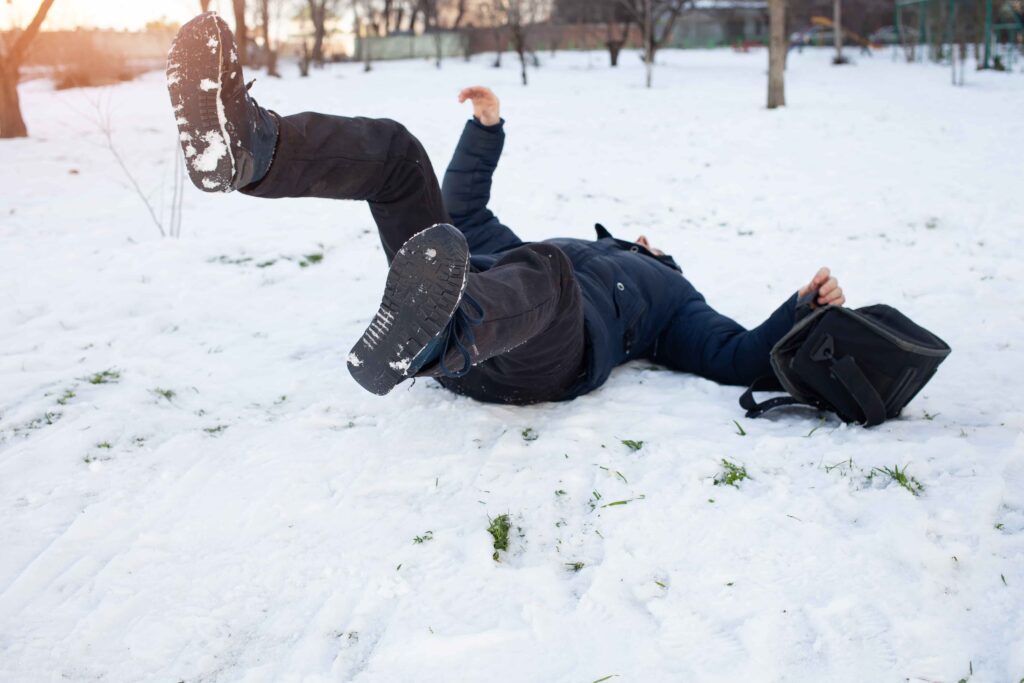
We see these accidents happen most frequently at:
- Parking Lots and Ramps: Snow compacted by cars quickly turns to ice. The daily cycle of melting and refreezing creates hidden, treacherous patches of "black ice."
- Sidewalks and Entryways: Businesses and apartment buildings are common fall sites. Heavy foot traffic turns fresh snow into slippery, packed ice. Cities like Milwaukee, Madison, and Waukesha have ordinances that require property owners to clear public sidewalks within a set time, usually 12 to 24 hours after a snowfall.
- Stairways: Outdoor stairs that are not properly cleared and salted become incredibly dangerous, especially without adequate handrails.
- Private Walkways: Homeowners are also responsible for keeping their property reasonably safe for visitors and delivery drivers. A slick driveway or an unshoveled path can lead to a valid injury claim if someone gets hurt.
What Are Your Rights Under Wisconsin Premises Liability Law?
"Premises liability" is the legal area that holds property owners responsible for injuries caused by unsafe conditions on their property.
The Duty of "Ordinary Care"
In Wisconsin, property owners have a duty of "ordinary care" to people legally on their property. Simply put, they must take reasonable steps to keep their property safe from foreseeable harm.
For snow and ice, "reasonable" involves:
- Timeliness: An owner must clear snow and ice within a reasonable time after a storm. They are not expected to be outside with a shovel during a blizzard, but they cannot wait for days, either. Many city ordinances define this timeframe.
- Notice: To be held liable, the property owner must have known, or should have known, about the danger. An ice patch that forms in minutes is different from a thick sheet of ice left for days. If a reasonable owner would have found the hazard through normal upkeep, they can be held responsible.
Does Wisconsin’s “Safe Place Statute” Apply?
Sometimes, yes. The Wisconsin Safe Place Statute imposes a higher standard of care than "ordinary care." It requires owners of public buildings and places of employment to keep their premises as safe as the nature of the property reasonably permits.
This heightened duty applies to places like grocery stores, office buildings, and retail shops. It means an owner of a business has a greater responsibility to actively discover and correct unsafe conditions, like an icy entrance, than a private homeowner might.
What if You Fall on a Public Sidewalk?
This can get tricky. While local laws require the adjacent property owner to shovel, Wisconsin law generally holds the municipality (the city or town) responsible for public sidewalk upkeep.
However, there is an exception if the injury is caused by a natural accumulation of snow or ice that has been there for three weeks. As mentioned earlier, claims against a government entity have a much shorter deadline: you must provide written notice within just 120 days of the incident.
What Is the Best Evidence to Support Your Claim?
A successful slip and fall claim depends on strong evidence that shows the property owner was negligent. While we handle the investigation, gathering some key information yourself can make a huge difference.
- Photographs of the Scene: Use your phone to take pictures of the exact spot where you fell, from multiple angles. Capture the ice or snow, the surrounding area, and any contributing factors like poor lighting or a downspout draining onto the walkway.
- Witness Information: If anyone saw you fall, get their name and phone number. A statement from a neutral third party who can confirm the dangerous condition is powerful.
- Incident Reports: If you fell at a business, report it to the manager immediately and ask for a copy of the incident report. This creates an official record of when and where the fall happened.
- The Shoes You Were Wearing: Set aside the footwear you had on during the fall. It can help counter any argument that your shoes were inappropriate for the weather.
- Medical Records: Your medical charts provide the critical link between the fall and the injuries you suffered. Following your doctor’s treatment plan is one of the most important things you can do.
What Should You Do Now, From Home?
Disabled self employed working sitting on a couch in the living room at home.
While we handle the legal work, there are several things you can do to protect your health and your potential claim.

- Follow Your Doctor's Orders: Your first job is to recover. Stick to your treatment plan, go to all follow-up appointments, and take medications as prescribed. This helps your physical recovery and documents the seriousness of your injuries.
- Keep a Pain Journal: Each day, jot down your pain levels on a scale of 1-10. Note how the injuries affect your daily life and list any activities that are now difficult or impossible. This journal can become a powerful story of your non-economic damages.
- Hold onto Everything: Keep all receipts, bills, and any letters from the insurance company in one place. This includes receipts for prescriptions, crutches, and even mileage for your doctor's appointments.
- Stay Off Social Media: Do not post about your accident, your injuries, or your activities online. Insurance adjusters regularly check social media for photos or comments that could be used to argue your injuries are not as severe as you claim.
- Direct All Communication to Us: Once you hire our firm, you no longer need to speak with the insurance company. If an adjuster calls, simply and politely refer them to your attorney at Nicolet Law.
FAQ About Wisconsin Snow and Ice Slip and Fall Accidents
Can I bring a claim if the owner hired a snow removal company?
Yes. If a property owner contracts another party to clear snow/ice but still fails to ensure safe conditions, liability may still attach. Multiple parties (owner, tenant, contractor) might share responsibility.
Can I still recover if I wore boots that weren’t ideal for the ice?
Yes, potentially. But your footwear could reduce your award. Under Wisconsin’s comparative fault rule, your own lack of care (such as wearing poor-tread shoes) might lower your compensation.
If the snowstorm is ongoing, could the owner be exempt?
Yes, to some extent. A property owner doesn’t always have to clear snow/ice while the storm is still falling. But once the storm ends, the duty to act begins.
Does this apply only to outdoor areas?
No. Indoor areas (like entryways) can also be involved when snow or ice is tracked inside, melts, refreezes, or pools. The same duty of care applies if a business or property owner should have addressed the hazard.
Don't Assume Your Fall Was Your Fault, Call a Slip and Fall Lawyer in Wisconsin To Clarify Your Legal Rights and Options
You might be thinking that pursuing full and fair compensation for slip and fall accident injuries on snow or ice is not worth the trouble. You might even blame yourself. That’s a common reaction. Especially when accident injuries make it hard enough to handle thinking about anything other than surviving another day.
If a property owner failed to maintain their property in a reasonably safe way and you were hurt as a result, you have the right to hold them accountable.
At Nicolet Law, we know how to build a case demonstrating where a property owner failed in their duty of care using strong evidence and decades of legal experience fighting insurers who would threaten to diminish or deny the compensation they owe.
Ready to explore your legal rights and options after falling on snow or ice? Nicolet Law Accident & Injury Lawyers is ready to listen to your story and provide legal clarity during a free case evaluation. Call our Wisconsin wintertime slip and fall accident injury lawyers at 1-855-NICOLET or message our personal injury law firm online to learn how you can take the next step forward with our support.
Nicolet Law Accident & Injury Lawyers
Address: 517 2nd St Unit #205,Hudson, WI 54016
Phone: 1-855-642-6538