
A car accident can leave you dealing with injuries, vehicle damage, missed work, and an insurance company that wants answers before you have them yourself. Many crashes seem straightforward at first glance, but the details matter. A construction-zone collision on I-465 raises different questions than a rear-end crash on Meridian Street or a delivery van accident in Irvington.
Location matters because it helps identify what evidence exists, what insurance policies may apply, and whether anyone beyond the other driver may share responsibility. That is especially true in Indianapolis, where more than 214,000 vehicles move through the downtown I-65/I-70 corridor every day, and where the I-465/I-69 interchange has been an active construction zone since 2022 and is scheduled to remain one into late 2026.
Your accident is personal. For the insurance company, it is a claim to evaluate and resolve. What follows covers where Indianapolis crashes concentrate, what changes when commercial or government vehicles are involved, a recent change to Indiana law, and what a car accident lawyer at Nicolet Law can do to build a case.
Not sure whether more than one party is responsible for your crash? Call 1-855-NICOLET for a free consultation and learn more about your claim. You do not pay attorney's fees unless we recover money for you.
Injured in Indiana? Get Nicolet.
Indianapolis, IN Car Accident Statistics
- More than 214,000 vehicles pass through the downtown interstate corridor daily, where I-65 and I-70 overlap and split within a few blocks, per the federal project record for INDOT's North Split reconstruction. Traffic that dense can produce multi-vehicle collisions with ease.
- More than 100,000 vehicles a day move through the I-465 and I-69 interchange, an active work zone since 2022 and scheduled to remain one into late 2026, according to INDOT's Clear Path 465 project. Work zones add a contractor to the list of possible defendants.
- 200,035 collisions were reported across Indiana in 2024, per the Indiana Criminal Justice Institute's Indiana Traffic Safety Facts 2024.
- 209 of Indiana's 2024 traffic deaths involved an alcohol-impaired driver, a quarter of the state total, from NHTSA's Alcohol-Impaired Driving: 2024 Data.
- Distraction appeared in 5.0% of all Indiana collisions in 2024, per the ICJI collision factor data. It shows up more often where traffic is dense and stops are frequent, which describes most of Marion County.
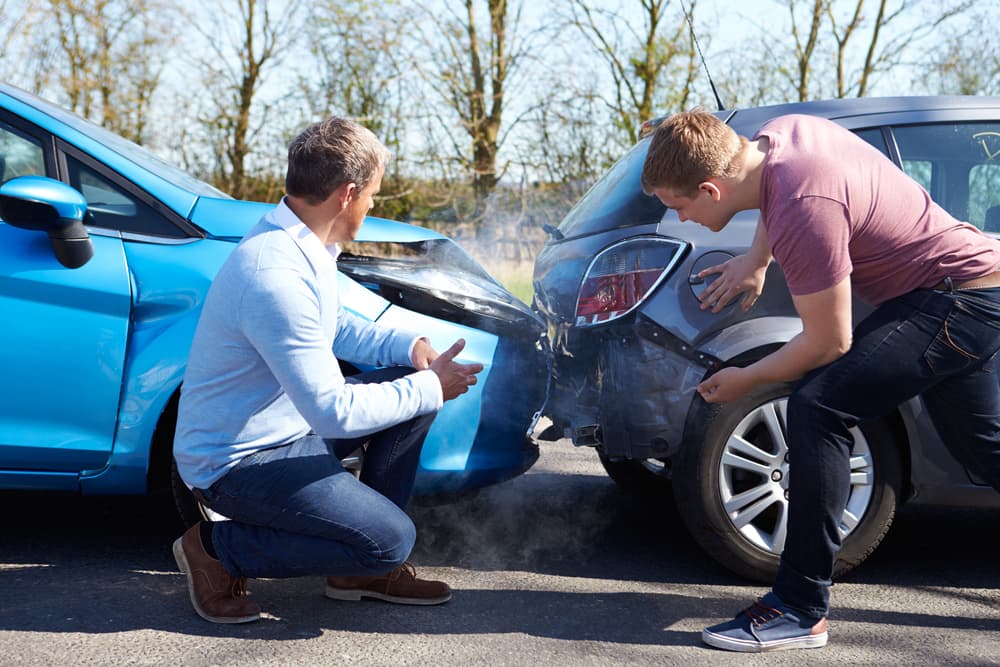
When several vehicles are involved in a crash, figuring out who caused the accident is rarely straightforward. If the collision happens in a construction zone, there may be additional parties, such as contractors or road crews, who could bear some responsibility.
Nicolet Law Accident & Injury Lawyers represents injured people across Wisconsin, Minnesota, North Dakota, Iowa, and Indiana, including Lake County and Hammond. If a collision here has changed your daily routine, an Indianapolis car accident lawyer from our firm can work out who was actually responsible, deal with the insurers, and pursue a claim that reflects the full impact of your injuries.
Where do Indianapolis crashes concentrate?
On the interstates that overlap, and on the wide arterials that carry city traffic between them. The location of a crash can significantly shape the subsequent claim, as it determines what evidence exists.
| Setting | What tends to happen | What evidence matters |
| Downtown I-65 and I-70 corridor | Multi-vehicle collisions, lane-change and merge disputes | Vehicle data, camera footage, sequence of impacts |
| I-465 loop and its interchanges | High-speed rear-end and sideswipe collisions | Following distance, speed at impact, roadway geometry |
| Active work zones | Collisions involving shifted lanes and temporary barriers | Contractor plans, signage placement, traffic control records |
| Major arterials and signalized intersections | Left-turn and red-light collisions | Signal timing, sight lines, witness accounts |
| Residential streets and neighborhood blocks | Delivery vehicles, backing collisions, pedestrian contact | Route and telematics data from the commercial operator |
The sooner that evidence is identified and preserved, the stronger a claim may be.
How is fault divided after an Indianapolis crash?
Your recovery drops by your percentage of fault and ends entirely above 50%. Ind. Code § 34-51-2-6 bars a claimant whose contributory fault is greater than the combined fault of everyone else.
Think of 50% as the cliff edge. At 30% fault, a claimant can still recover 70% of their damages. At 51% fault, recovery drops to zero.
Indiana's definition of fault is also broad enough to include incurred risk and an unreasonable failure to avoid or limit an injury, and that definition applies to passengers as readily as to drivers.
There is a recent development worth knowing, especially because some legal resources online have not been updated yet. For causes of action accruing after June 30, 2024, evidence that an occupant aged 15 or older failed to use a safety belt is admissible in a civil action as to mitigation of damages under Ind. Code § 9-19-10-7. Before that change, Indiana kept that evidence out of most civil cases.
That rule affects mitigation of damages, not who caused the crash. An unbelted occupant did not cause the driver who ran the light to run it. But the argument now has a statutory foothold in Indiana that it lacked two years ago, and answering it takes medical evidence about which injuries a belt would plausibly have changed or prevented.
What if the crash involved a government or transit vehicle?
Then a notice deadline applies first. A claim against a city, county, or township requires written notice within 180 days under Ind. Code § 34-13-3-8. Against the State of Indiana, § 34-13-3-6 allows 270 days.
Two Indianapolis specifics make this trickier than it sounds.
Marion County and the City of Indianapolis have shared a government since 1970, but Speedway, Lawrence, Beech Grove, and Southport kept their own. Our Indianapolis personal injury lawyers cover this in detail, because notice sent to the wrong municipality does not preserve a claim against the right one.
Indiana's comparative fault rules do not apply to governmental defendants at all under Ind. Code § 34-51-2-2. Contributory negligence governs instead, meaning any fault assigned to you can end the claim rather than reduce it. Liability is separately capped at $700,000 per person under § 34-13-3-4.
What changes when a commercial or delivery vehicle is involved?

If a company vehicle was involved, there may be more insurance coverage available, but that coverage may have a larger legal team working to protect it. The good news is that electronic records in these cases often provide powerful evidence. Indianapolis has an unusual density of commercial vehicles for a city its size, because it is a national logistics center as well as a metro area.
Practically, this changes three things.
Insurance limits. Commercial policies commonly run far above the $25,000 per person Indiana requires of ordinary drivers under Ind. Code § 9-25-4-5. Bigger limits mean a more organized defense and a company that will not simply pay to make a claim go away.
Employment questions. Whether a driver was on the clock, on a personal errand, or working as a contractor changes which policies respond. Gig and last-mile delivery drivers sit in the messiest part of this, and the answer depends on the actual arrangement rather than the label used in a contract.
Electronic records. Route data, telematics, and dispatch logs exist and can be preserved, but only if someone acts quickly to do so. A company under no legal obligation to hold that data will let it cycle out.
If the vehicle that hit you had a company name on the door, tell us early. Those records do not last forever. Call 1-855-NICOLET to talk with an experienced lawyer.
Injured in Indiana? Get Nicolet.
How long do you have to bring an Indianapolis crash claim?
Two years from the collision, under Ind. Code § 34-11-2-4.
| Situation | Deadline |
| Most Indiana crash claims | 2 years from the collision |
| Crash with a city, county, township, or transit vehicle | 180-day written notice of claim |
| Crash with a State of Indiana vehicle | 270-day written notice |
| Wrongful death | 2 years from the date of death, brought by the personal representative, or the surviving parents |
Deadlines have exceptions, and the safest way to protect your claim is to speak with a lawyer as soon as possible.
An early call costs nothing, and the earlier an attorney gets involved, the more evidence they can preserve. Call 1-855-NICOLET for a free consultation. There are no attorney's fees unless we recover money for you.
FAQs About Indianapolis Car Accident Lawyers
My crash happened in a construction zone. Is the contractor responsible?
Sometimes, and it is worth investigating rather than assuming. Work zone claims turn on whether traffic control matched the approved plan: signage placement, lane taper, barrier positioning, lighting. Those records exist and can be obtained, but they are held by the contractor and the agency rather than by anyone who will volunteer them. An Indianapolis car accident lawyer at Nicolet Law can request them as part of a free case review.
A rideshare driver hit me. Whose insurance pays?
It depends on what the driver was doing at that moment. Rideshare coverage generally works differently depending on whether the app was on and waiting for a ride request, or actively carrying a passenger, and the driver's personal policy may exclude commercial use entirely. We read all of the policies rather than accepting the first answer a carrier gives.
The other driver was from out of state. Does that complicate things?
Less than people fear, given how much through traffic moves on I-65 and I-70. A crash in Marion County is generally governed by Indiana law and filed here even if the other driver lives elsewhere. It can add some logistical issues, and occasionally it means dealing with an adjuster unfamiliar with Indiana rules, which is a reason to have someone on your side who is.
Do I have to use my own insurance if the other driver was at fault?
Sometimes, yes. Using your own insurance does not mean you are accepting blame. If your policy includes coverage for vehicle damage or medical expenses, it may provide faster help while the insurance companies determine fault. If the other driver is ultimately found responsible, the insurers can often work out reimbursement later. Helping clients navigate that process is part of what we do.
What if I did not go to the hospital right away?
It is common and it is not disqualifying. Soft tissue injuries, as well as injuries to the neck or brain can take days to show symptoms. Get evaluated, report every symptom, both major and minor, and expect the insurer to question why you didn’t go to the hospital right away. Consistent records are what answer that, and an Indianapolis car accident lawyer at Nicolet Law can help you build them from here.
The insurer offered to total my car and close everything out. Should I sign?
Separate the two questions before signing anything. A property damage settlement and an injury settlement are different releases, and signing a broad release to resolve a vehicle claim can extinguish an injury claim you have not valued yet. Before signing a release, let us review the paperwork so we can explain how it will affect you.
Legal Resources About Indiana Car Accident Claims

Below are attorney-curated resources that answer frequently asked questions we receive about car accident claims. They contain general information and are not substitutes for personalized legal advice.
- Dealing with Insurance Adjusters After a Milwaukee Car Accident: Dos and Don'ts
- Who Is at Fault in a Rear-End Accident?
- What To Do After a Car Accident
- How Long After a Car Accident Can I Claim Injury?
Tell us more about the events that happened before, during, and after your accident, and we can tell you more about your options. Consultations are free, and you do not pay attorney's fees unless we recover money for you. Call an Indianapolis car accident lawyer at 1-855-NICOLET or reach us online.