- Key Takeaways About Why Legal Representation Matters in Blind Spot Truck Accidents
- Truck Blind Spot Crash Statistics
- Understanding Truck Blind Spots and the "No-Zone"
- Common Legal Problems in Blind Spot Accident Claims and How a Lawyer Can Help
- Key Laws and Truck Accident Filing Deadlines in the Midwest
- Why Do These Accidents Happen? (Establishing Negligence)
- Blind Spot Truck Accident Claim FAQs
- Contact Nicolet Law For a Free Case Evaluation After a Blind Spot Truck Accident in WI, MN, IA, and ND
- Legal Resources for Truck Accident Victims
Negligence is often at the heart of blind spot truck accidents. Insufficient driver training, fatigue from long hours on the road, and failure to follow safety protocols can all lead to devastating collisions.
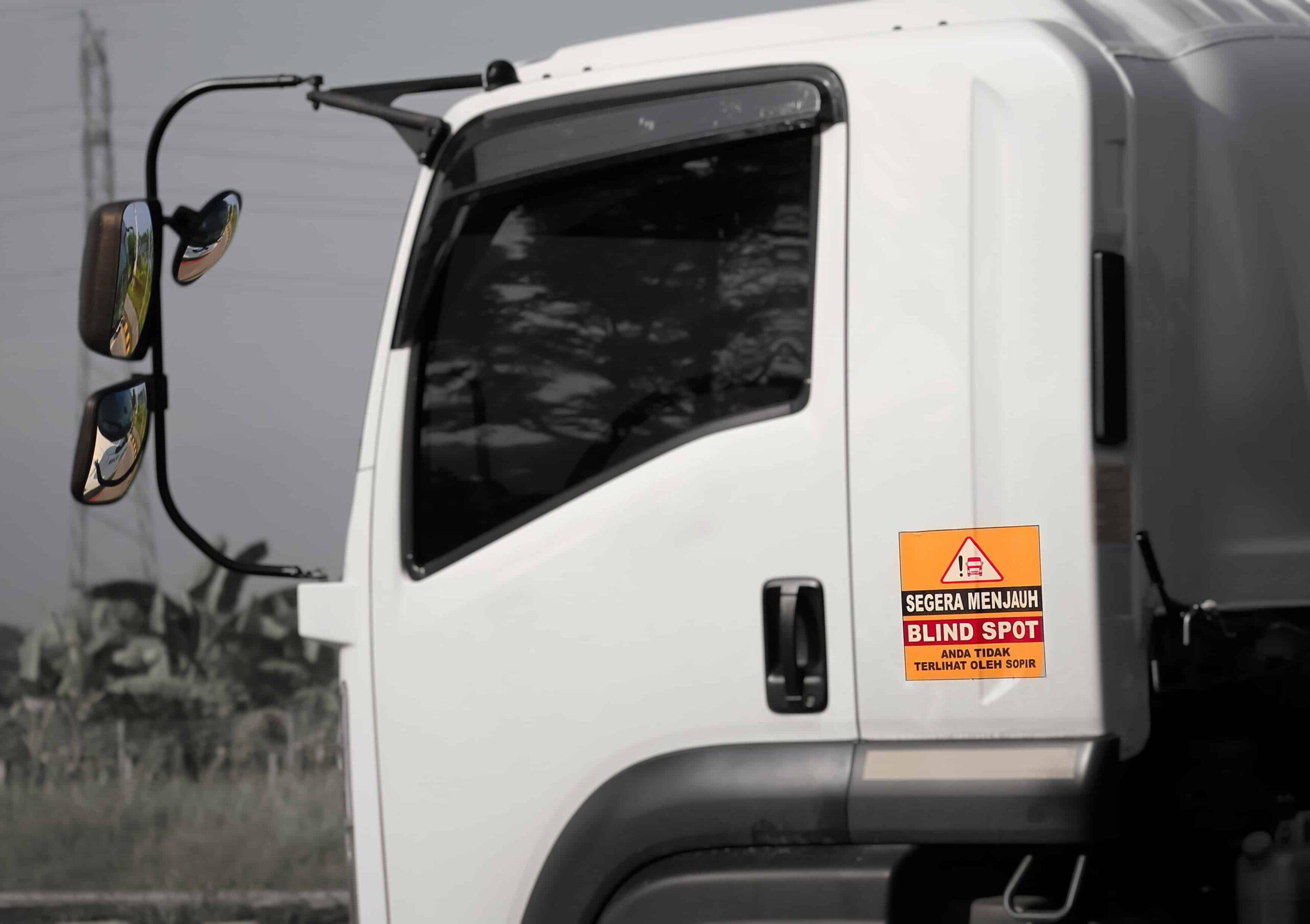
Blind spots, or "No-Zones," are areas around a semi-truck where the driver’s visibility is severely limited. When truck drivers fail to account for these areas, the consequences can include severe injuries, property damage, and complex legal disputes.
Midwest truck accident lawyers from Nicolet Law can help demonstrate the negligence that caused blind-spot accidents, fight back against insurers seeking to minimize claim payouts, and advocate for the maximum compensation accident victims may be eligible for under the law.
If you’ve been injured in a blind spot truck accident, how can you ensure your rights are protected and your claim is taken seriously?
Contact Nicolet Law online or at 1-855-NICOLET for a free consultation discussing your legal rights and options.
Injured? Get Nicolet.
Key Takeaways About Why Legal Representation Matters in Blind Spot Truck Accidents
- Truck blind spots are a serious hazard: Semi-trucks have large blind spots on all four sides, especially on the right. Federal regulations require drivers to check these areas, but failure to do so often leads to devastating crashes. A lawyer can investigate whether the driver followed these safety rules.
- Liability is often disputed: Trucking companies may argue that you were at fault for being in a blind spot. Legal representation can ensure that evidence, such as black box data and accident reconstruction, is used to challenge these claims and prove negligence.
- Insurers prioritize their bottom line: Insurance adjusters may offer quick, low settlements that don’t cover long-term costs. A lawyer can negotiate on your behalf to pursue the full compensation you need.
Truck Blind Spot Crash Statistics

Understanding why blind spots cause so many truck accidents begins with examining the frequency of serious crashes involving large trucks nationwide and across the Midwest.
Data from organizations like the National Safety Council (NSC), the Federal Motor Carrier Safety Administration (FMCSA), and the FMCSA Crash Statistics portal show just how severe these collisions can be, how common they are, and how significantly they affect those in passenger vehicles:
- The NSC Injury Facts report that 5,472 people died in crashes involving large trucks in 2023, and deaths in large‑truck crashes have increased by about 40 percent over the last decade.
- According to FMCSA’s Large Truck and Bus Crash Facts 2022, there were approximately 503,000 police‑reported crashes involving large trucks in 2022, including 5,279 fatal crashes and 114,000 injury crashes.
- The same FMCSA report notes that in 2022, about 82–83 percent of people killed in crashes involving large trucks were occupants of other vehicles or non‑motorists, not the truck drivers themselves.
- FMCSA’s Crash Statistics Midwest summary confirms that, as of late 2025, tens of thousands of fatal and injury crashes involving large trucks have occurred in the Midwest, affecting drivers in Wisconsin, Minnesota, North Dakota, and Iowa.
- Research from the IIHS and related studies suggests that roughly 50,000 police-reported crashes per year could be prevented if every vehicle had similarly effective blind-spot monitoring.
These statistics highlight why blind‑spot and visibility errors around large trucks are so dangerous. If you have been injured as a result of blind spot negligence, speak with a personal injury law firm to explore your legal rights and options.
Understanding Truck Blind Spots and the "No-Zone"
To understand why these accidents occur, it is important to understand the mechanics of a commercial truck's visibility. Unlike passenger cars, semi-trucks have extensive blind spots, often referred to as "No-Zones," where the driver literally cannot see other vehicles.
Where Are the Blind Spots on a Semi-Truck?
Blind spots, also known as "No-Zones," are areas around a truck where visibility is severely limited, creating significant risks for other drivers. These blind spots include:
- The left side: The lane immediately to the left of the cab, extending backward. Drivers must check mirrors carefully before merging or turning.
- The right side: A massive blind spot that spans two lanes and extends beyond the length of the trailer. This is one of the most hazardous areas for merging accidents, particularly on highways like I-94 in Wisconsin or I-35 in Minnesota.
- The front: The area directly in front of the cab (about 20 feet) is invisible to the driver due to the height of the hood. Vehicles in this zone are at risk if the truck stops suddenly.
- The rear: A long blind spot can extend nearly 200 feet behind the trailer. Drivers following too closely in this zone are often unseen, increasing the risk of rear-end collisions.
When a truck driver makes a negligent lane change and hits a car in their blind spot, they often claim they "didn't see" the victim. However, failing to see a vehicle does not absolve them of liability. It often indicates recognition failure or inadequate surveillance.
Common Legal Problems in Blind Spot Accident Claims and How a Lawyer Can Help
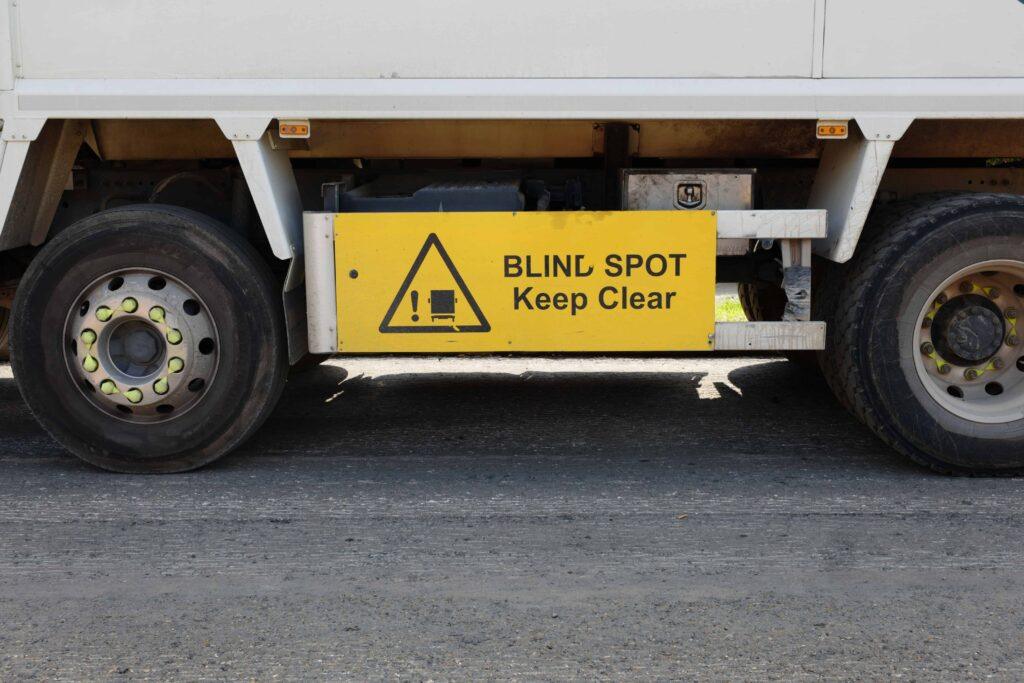
Blind spot truck accidents often leave victims facing significant challenges when seeking compensation. Insurance companies are quick to cast doubt, shift blame, and minimize payouts, making legal representation essential.
Insurance Company Tactics
Insurance adjusters may contact you soon after the crash, appearing friendly and concerned about your well-being. However, their goal is to protect their company’s bottom line by:
- Shifting blame: They might argue you were speeding, following too closely, or lingering in the "No-Zone," using comparative negligence laws to reduce their liability.
- Recording statements: Adjusters may request a recorded statement, hoping to twist your words to imply fault or downplay your injuries.
- Offering low settlements: Early settlement offers often fail to account for long-term medical needs, lost wages, or other damages.
These tactics are designed to weaken your claim and get you to accept a lowball settlement. A lawyer can step in to handle all communication, ensuring your rights are protected and your case is built on solid evidence.
Proof and Documentation Gaps
Proving fault in a blind spot accident requires more than just your word against the truck driver’s. Key evidence can be lost without swift legal action:
- Lack of witnesses: On highways like I-90 or I-29, accidents happen quickly, and witnesses may not stop to provide statements.
- Missing data: Trucking companies may overwrite black box data or repair the vehicle, erasing critical evidence of speed, braking, or lane changes.
An attorney can ensure this evidence is preserved and analyzed, strengthening your case and countering any attempts to shift blame.
How a Lawyer Helps
Nicolet Law attorneys take immediate action to address these challenges and build a strong case:
- Investigate the crash scene and gather police reports, photos, and witness statements.
- Preserve electronic logging device (ELD) data and black box information to investigate driver actions before the crash.
- Analyze the truck’s mirrors, blind spot monitoring systems, and maintenance records for potential defects.
- Communicate directly with the insurer to prevent harassment and ensure your words aren’t misused.
With a lawyer managing these critical steps, you can focus on recovery while they work to secure the compensation you need to move forward.
Key Laws and Truck Accident Filing Deadlines in the Midwest

Understanding the laws and deadlines applicable to truck accident claims is crucial for protecting your rights. Each state in the Midwest has specific rules that can impact your ability to recover compensation, making it essential to act quickly and consult with an attorney.
Statute of Limitations in WI, ND, IA, and MN
The statute of limitations sets a strict deadline for filing a lawsuit. Missing this deadline can mean losing your right to seek compensation entirely.
- Minnesota: You generally have six years to file a personal injury claim.
- Wisconsin: The deadline is typically three years.
- North Dakota: You have up to six years to file.
- Iowa: The statute of limitations is just two years, making immediate action crucial.
These deadlines may be shortened or extended depending on the vehicles involved, the age of the injured parties, and whether a wrongful death occurred. An attorney from Nicolet Law can monitor these deadlines to ensure your claim is filed on time and preserve your right to pursue compensation.
Comparative Fault Rules
In the Midwest, comparative fault laws determine how much compensation you can recover if you are found partially at fault for the accident.
- Wisconsin, Iowa, and Minnesota: You can recover damages as long as you are 50% or less at fault. Once you hit the 51% mark, you cannot receive compensation.
- North Dakota: You can recover if you are less than 50% at fault. If you share fault 50-50, you are unable to receive compensation.
For example, if a jury finds you 20% at fault for "lingering" in a truck’s blind spot, your $100,000 settlement could be reduced to $80,000. An attorney from Nicolet can work to minimize any fault assigned to you, using evidence and expert analysis to challenge unfair blame and maximize your recovery.
Why Do These Accidents Happen? (Establishing Negligence)
To win a truck accident case, you must prove that the truck driver, trucking company, or another party was negligent.
Blind spot accidents are rarely "freak accidents"; they often result from preventable failures that put other drivers at risk:
- The driver failed to check blind spots before changing lanes. Truck drivers are professionally trained to monitor their "No-Zones," but poor surveillance and inattention remain leading causes of blind-spot accidents. This failure can result in devastating injuries, such as spinal cord damage or traumatic brain injuries, especially in high-speed collisions.
- The driver failed to signal before merging or turning. Without proper signaling, other drivers have no warning to adjust their position, leading to lane-change collisions or rear-end crashes. These accidents often cause severe injuries, including broken bones and whiplash.
- Driver fatigue reduced reaction times and mirror checks. Long hours on the road can leave truck drivers exhausted, impairing their ability to perform thorough safety checks. Fatigue-related blind spot accidents are common on Midwest highways, such as I-94 and I-35, where long stretches of road can lead to drowsy driving.
- Improperly adjusted mirrors created larger blind spots. If a truck’s mirrors are not set correctly, the driver’s visibility is further reduced, increasing the risk of accidents. Nicolet Law attorneys can investigate whether the truck’s equipment was properly maintained and compliant with federal safety standards.
- Defective blind spot monitoring systems failed to alert the driver. When technology, such as blind spot sensors or cameras, malfunctions, the manufacturer may be held liable. These failures can lead to catastrophic injuries, including wrongful death in underride accidents.
Nicolet Law attorneys can work with accident reconstruction experts to uncover the exact cause of a crash and identify all liable parties, from the driver to the trucking company or even the manufacturer.
By building a strong case, we help clients pursue compensation for medical expenses, lost wages, pain and suffering, and other damages.
Blind Spot Truck Accident Claim FAQs
How do you prove the truck driver didn't look?
We rely on evidence such as the truck’s black box data, which records speed and braking, as well as witness testimony. We also review the truck’s mirror setup and electronic logging device (ELD) to determine whether the driver was fatigued or distracted at the time of the lane change.
Who is liable for a blind spot accident?
Liability often falls on the truck driver for negligent driving, but the trucking company can also be liable for negligent training or hiring practices. In some cases, a manufacturer may be liable if safety equipment, such as mirrors or sensors, fails.
What if the insurance company blames me?
This is a common tactic. Do not accept blame or sign anything. Contact a lawyer immediately. We can investigate the crash to gather evidence that refutes their claims and protects your right to compensation under comparative negligence laws.
Contact Nicolet Law For a Free Case Evaluation After a Blind Spot Truck Accident in WI, MN, IA, and ND
Blind spot truck accidents are terrifying and can alter the course of your life in seconds.
The financial and physical toll is heavy, and the trucking company’s insurer is working hard to protect its profits rather than your well-being.
Navigating the legal process without guidance can lead to frustration and financial loss.
You need a team that understands the tactics used by commercial insurers and knows how to build a winning case in the Midwest.
If you or a loved one has been injured in a blind spot truck accident, contact Nicolet Law Accident & Injury Lawyers online or at 1-855-NICOLET for a free case evaluation.
We are ready to help you understand your options and fight for the compensation you need.
Legal Resources for Truck Accident Victims
Looking for legal insights about your truck accident claim? Check out our curated resources designed to help you understand how lawyers can help you fight for the maximum compensation you may be eligible for under the law:
- Why You Need a Truck Accident Lawyer
- What Are the Types of Injuries Suffered in Trucking Accidents?
- Truck Accident Injuries: What Compensation Am I Entitled To?
- Personal Injury Case Timeline: What to Expect From Start to Settlement
Need personalized legal guidance? Call 1-855-NICOLET or message our award-winning personal injury law firm online to learn how we can help during a free case evaluation.