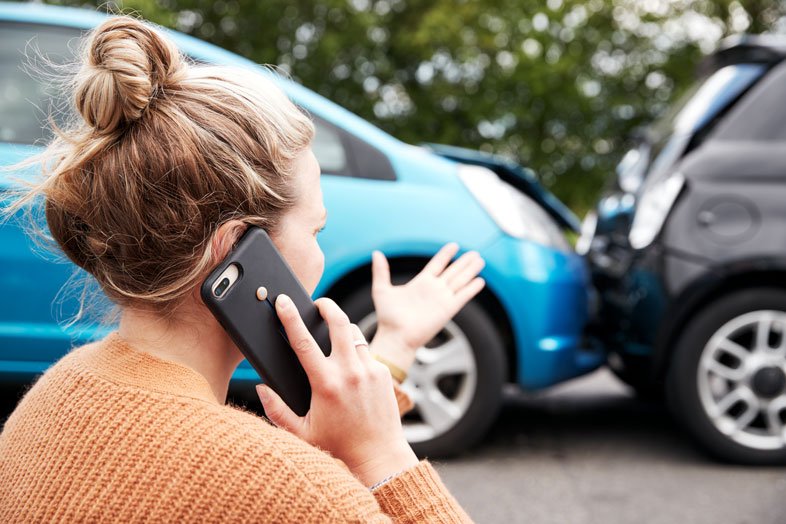
Only one state—New Hampshire—does not require licensed drivers to carry auto insurance. Some might think that this would make uninsured drivers a rare commodity in the United States, but that’s far from the reality. In recent years, an estimated 32 million drivers have hit the road with no coverage.
It can be harrowing to get in a car accident and all the more frustrating to learn that the driver who hit you was one of the 32 million. What happens next and the way your recovery can pan out depends on your insurance policy and the laws of the state you live in.
At Nicolet Law Accident & Injury Attorneys, we know how easily accident claims can become complicated, especially when an uninsured driver is involved. Our attorneys have extensive experience supporting accident victims and pursuing compensation that matches their needs. If you have been in an accident with an uninsured motorist, call 1-855-NICOLET to set up a free consultation. Our phone lines are open 24/7, and we proudly serve Minnesota, Wisconsin, North Dakota, and Iowa.
How Common Are Uninsured Drivers In Your State?
32 million uninsured drivers is roughly 14% of the total drivers in the United States. On a state-by-state basis, the percentage can vary. Here’s how the four states Nicolet Law serves compare:

- Wisconsin: 15%
- Minnesota: 9%
- Iowa: 10%
- North Dakota: 8%
While having any coverage at all can help, many drivers carry the state minimum, which can still come up very short in the face of a serious crash. Let’s look at how the post-accident insurance process can differ from state to state.
Is Your State At-Fault or No-Fault?
Minnesota & North Dakota: No-Fault States
In no-fault states, your own insurance coverage typically handles the immediate cost of your medical bills, lost wages, and related damages. In Minnesota and North Dakota, this coverage is known as Personal Injury Protection (PIP).
PIP kicks in regardless of who caused the crash.
Here is how it can and cannot help in Minnesota:
- Up to $20,000 in coverage for medical costs
- Up to $20,000 in coverage for non-medical costs, like lost wages
- No coverage for non-economic damages like pain and suffering
Here is how it can and cannot help in North Dakota:
- Up to $30,000 in coverage for medical expenses (and potentially other non-medical costs)
- No coverage for PIP coverage
How can you claim non-economic damages like pain and suffering in Minnesota?
You have to meet the tort threshold with one of these requirements:
- You ring up $4,000 or more in medical costs (for expenses considered reasonable)
- You experience permanent injury, disfigurement, or 60 days of disability
How can you claim non-economic damages like pain and suffering in North Dakota
You have to meet the tort threshold with one of these requirements:
- You ring up $2,500 or more in medical costs (for expenses considered reasonable)
- You experience dismemberment, serious and permanent disfigurement, or 60 days of disability
So what does the overall process look like?
Let’s use Minnesota’s PIP numbers.
- PIP pays first (up to $20k medical + $20k non-medical)
- Did you meet any of the requirements for a tort threshold?
- Yes → Your uninsured motorist (UM) coverage may address non-economic damages and the remaining economic damages that exceed PIP’s limits.
- No → Your UM coverage may address any remaining economic damages that exceed PIP’s limits.
- If your UM coverage and PIP fall short of compensating your total damages
- You previously met the tort threshold.→ A lawsuit can pursue remaining damages, non-economic and economic.
- You did not previously meet the tort threshold.→ A lawsuit can only pursue remaining economic damages.
Important note: The above information aims to simplify the process for an easier initial understanding.
You may have other coverage that would be pertinent in handling an uninsured motorist claim. Talking with an experienced attorney can help provide clarity on what your “overall process” could look like, given your specific insurance coverage.
If any of the content in this blog is tough to get through, know that help is available. You can set up a free consultation with an attorney from Nicolet Law to go over the details of your case and what your options may be moving forward. We hope that this blog sheds light on accident claims, but there’s a lot of information here to process. You’re not alone in feeling overwhelmed.
Wisconsin & Iowa (At-Fault States):
In at-fault states, the person that caused the accident is responsible for covering the damages. If the at-fault driver is uninsured, you may:
- Turn to your uninsured motorist coverage (and other pertinent coverage)
- If your UM coverage falls short, you can pursue additional compensation through a lawsuit against the driver
Now let’s take a look at how uninsured motorist coverage can help.
What Does “Uninsured Motorist Coverage” Cover?
Uninsured motorist coverage is set up to protect you and any passengers you might have after a collision with an uninsured driver. In most cases this coverage helps pay for costs that are related to bodily injury, not property damage.
So UM coverage can generally address your medical bills, but not your totaled car.
Property damage coverage can be possible through means such as uninsured motorist property damage coverage or collision coverage.
Here are the minimum liability numbers for the four states Nicolet Law serves:
- North Dakota: $25,000 per person / $50,000 per accident
- Wisconsin: $25,000 per person / $50,000 per accident
- Minnesota: $25,000 per person / $50,000 per accident
- Iowa: $20,000 per person / $40,000 per accident*
*An important technicality: Iowa insurance providers are required to include uninsured motorist coverage in their policies that matches minimum liability coverage. Drivers are allowed to waive this coverage with a written statement that meets certain requirements. At Nicolet Law we highly advise against waiving this coverage.
Per Person vs. Per Accident
While “per person” from the previous section may seem simple enough, the “per accident” label can raise questions.
You are a person who was in an accident. Do both labels apply? Here’s how they are different:
Per person: You were driving the car with no passengers. You—and only you—are seeking medical assistance.
Per accident: You were driving the car with at least one passenger. You and your passenger(s) need treatment.
The per-accident coverage limit serves to protect the insurance company from expensive claims. If you are driving the car with two other passengers, and all three of you have $25,000 in medical bills, that’s $75,000 total.
While the $25,000 stays within the ‘per person’ threshold, the $75,000 exceeds the $50,000 ‘per accident’ limit. If you are facing similar circumstances, reaching out to an experienced personal injury lawyer ASAP can help provide clarity for what can come next and how payouts can vary.
Comparative Negligence Can Also Factor In
To put it simply: How much you can recover can depend on how much responsibility you have for the crash. If you are seeking $100,000 in damages for an accident claim, but you’re proven to be 20% liable, the most you can acquire is $80,000.
However, there comes a point when you may hold too much liability to seek compensation at all. This typically comes just after the 50/50 mark. If you bear more responsibility than the other driver, you will be unable to seek compensation, as you are by legal definition the at-fault driver.
- Minnesota: You can recover damages if you are 50% or less at fault
- Wisconsin: You can recover damages if you are 50% or less at fault
- Iowa: You can recover damages if you are 50% or less at fault
- North Dakota: You can recover damages if you are less than 50% at fault
This can provide all the more motivation for uninsured drivers to try to sway blame in your direction.
The Reality Of Suing An Uninsured Driver
You are probably wondering a key question:
“How do I sue someone who likely does not have much money?”
It’s a common concern. Uninsured drivers tend to lack coverage because they lack the financial means to pay for it. The cost of an accident can be substantially higher than the insurance premiums they already can’t afford.
Still, even if they have insufficient funds, it is still possible to seek compensation. This can be done via:
- Wage garnishment
- Property liens
- Structured settlements
Being in this situation may leave you wondering what options make the most sense for your recovery. A personal injury attorney who has experience handling uninsured motorist cases can help provide clarity on those questions.
Was Anyone Else Liable?
Don’t underestimate the number of factors that may be involved in an accident claim. Here are some valuable questions to ask:

- Is the uninsured driver the owner of the vehicle?
- Was the uninsured driver “on the job”?
- Had the uninsured driver been previously overserved at a bar?
- Was the car they were driving defective in any way?
Is the uninsured driver the owner of the vehicle?
The uninsured driver may be borrowing it or leasing it. If someone else owns the car, that owner’s coverage could be a saving grace while seeking compensation.
Was the uninsured driver “on the job?”
If the driver was working at the time, whether in a company vehicle or a personal vehicle performing job-related tasks, their employer’s insurance may be responsible for covering accident-related damages. Whether or not they were truly performing job-related tasks may be a source of dispute.
Had the uninsured driver been previously overserved at a bar?
Dram shop laws serve to hold bars and restaurants liable for how much they serve their patrons. Bartenders and servers are trained to spot signs of intoxication in customers and cut them off. If they don’t cut off service, the bar/restaurant can be held liable for any accident that results.
Was the car they were driving defective in any way?
While some drivers simply put off desperately needed repairs, some vehicle manufacturers may cut corners, leaving their vehicles with unresolved defects, primed for an accident. A mechanic, trusted to address repairs and notify the vehicle owner of outstanding issues, may cut corners and leave hazards unaddressed or even create new ones.
While the uninsured driver may not be absolved of fault, the safety of their vehicle may be compromised by other parties.
Reaching out to an experienced personal injury attorney can be crucial when it comes to these efforts. You deserve representation that is ready to do a deep dive into the circumstances surrounding your case and the opportunities that exist to support your recovery.
The Deadline For Filing A Claim
If you have been hit by an uninsured driver, you may be wondering how long you have to file a claim and whether you are approaching the deadline to do so. There is a strict statute of limitations set for those who want to file an injury claim.
Statute of limitations is the formal term for deadline, which serves as a cutoff point for filing a claim and seeking compensation. Even if you believe you have a strong case, if you do not file a claim before the cutoff, you will lose your right to seek compensation. Nicolet Law serves Wisconsin, Iowa, North Dakota, and Minnesota, where accident claims have the following timelines:
- Wisconsin: You have 3 years to file an accident claim
- Minnesota: You have 6 years to file an accident claim
- Iowa: You have 2 years to file an accident claim
- North Dakota: You have 6 years to file an accident claim
While certain circumstances can shift the statute of limitations (i.e., a government entity is involved), uninsured drivers are not one of them. Even though these years-long deadlines may come as a relief to some, keep in mind that the sooner you act, the better. The evidence that can build a stronger accident claim,
Reach Out To A Car Accident Lawyer Today! Get Nicolet

If you or a loved one has been in an accident, you are likely already dealing with the strife and challenges that can come with it. The insurance process surrounding accidents can be difficult to navigate to begin with, and an uninsured driver adds yet another complication. Nicolet Law is ready to support you.
We have experienced attorneys who are familiar with state laws and the intricacies of accident claims. They’re familiar with the stress and uncertainty that can come with being in an accident. You can set up a free consultation by reaching out to us by phone at 1-855-NICOLET or through the contact form on our website.